Ingredient reference
Ašvaganda
Withania somnifera · Solanaceae
Native range
Indicku subkontinent, Blizky vychod a casti Afriky
Part used
Koren
Key compounds
Withanolide A, Withaferin A, Withanoside IV, Withanoside VI, Sitoindosides
Traditional use
Pouzivana v ajurvedskej medicine viac ako 3 000 rokov ako 'rasayana' (omladujuca bylina)
Co je ašvaganda?
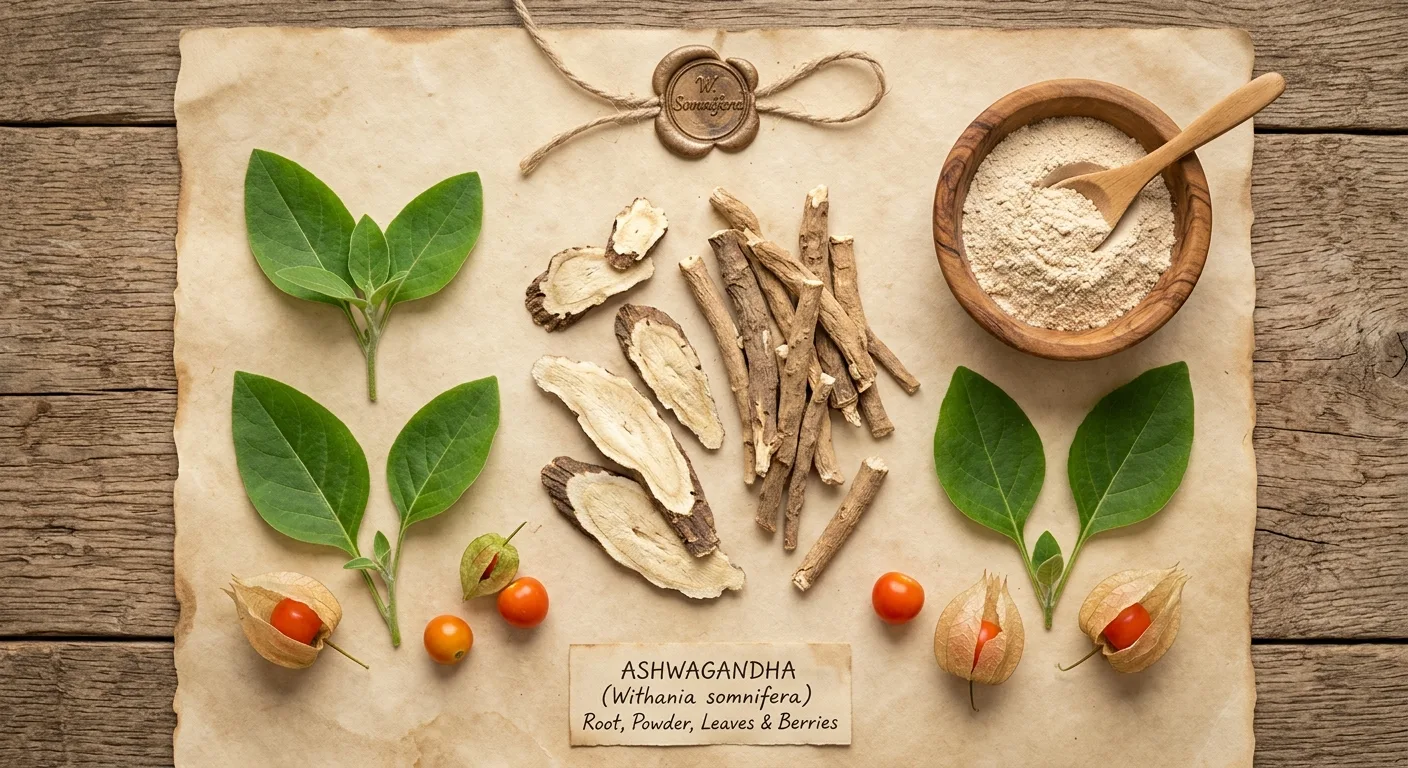
Ašvaganda (Withania somnifera) je maly, stalezeleny, trvalý ker z čelade Solanaceae — rovnakej čelade, do ktorej patri rajčiak, zemiak, baklažan, čili paprička a tabak. Dorasta do vyšky priblizne 35-75 cm, so šedozelenymi ovalnymi listami, malymi zvonkovitymi zelenožltymi kvetmi a oranžovočervenymi plodmi o velkosti malej čerešne. Napriek dramaticky znejucemu alternativnemu nazvu 'indicky ženšen' nie je ašvaganda botanicky pribuzna s pravym ženšenom (Panax ginseng) — porovnanie je funkcne, nie taxonomicke, založene na podobnom sposobe, akym su obe rastliny pouzivane v ich bylinkarsych tradiciach ako posilovace alebo 'tonizujuce' byliny.
Sanskrtsky nazov 'ashwagandha' sa doslova preklada ako 'pach kona', odkazujuci na jednej urovni na silny, mierne konsky pach čerstvo vykopaného korena a na druhej urovni na tradicne ajurvedske presvedčenie, ze rastlina dava silu a zivotnu energiu kona tym, ktori ju uzivaju. Latinsky druhovy nazov somnifera znamena 'prinasajuci spanok' — odkaz na tradicne pouzitie rastliny v ajurvedskej praxi na podporu kludneho spanku, hoci v modernom zapadnom pouziti je bylina častejšie spajana s dennymi adaptogennymi učinkami nez so sedaciou. Ta ista rastlina podporuje obe pouzitia v tradicnom pohlade, v zavislosti od davky a pripravy.
V ajurvedskom systeme tradičnej indickej mediciny je ašvaganda klasifikovana ako 'rasayana' — kategoria bylin a pripravkov špecialne použivanych na podporu celkovej vitality, dlhovekosti a odolnosti v priebehu času, nie na riešenie akutnych ochoreni. Kategoria rasayana zahŕňa niektore z najceněnějšich bylin ajurvedskej farmakopeje a ašvaganda je trvalo radiena medzi najvyznamnejšie z nich v ajurvedskych textoch siahajucich najmenej 3 000 rokov spat. V modernej indickej bylinkarstve literature je niekedy nazyvana 'kráľom ajurvedskych bylin' — opis, ktory pripad mierne nadhodnocuje (Ayurveda nema formalnu hierarchiu bylin), ale presne odraža postavenie ašvagandy ako jednej z najširšie pouzivanych a najlepšie dokumentovanych rastlin v celej indickej liečitelskej tradicii.
Kde rastie ašvaganda?
Withania somnifera je povodna zo suchych oblasti indickeho subkontinentu, Blizkeho vychodu a časti Afriky. Jej zakladny prirodzeny areal pokryva strednu a severnu Indiu, Pakistan, Nepal a Afganistan, s menšimi populaciami siahajucimi na zapad cez Iran a Arabsky poloostrov a na juh do severnej a vychodnej Afriky. V ramci tohto arealu ašvaganda rastie na narusenych piesočnatych podach, v suchom krovinnom poraste, na uhoroch a pozdlž ciest — je to odolna, suchu tolerantna rastlina, ktorej sa najlepšie dari v horkych, suchych klimach s dobre odvodnenymi podami a pomerne malym množstvom zražok. Nie je to tropicka rastlina dažďoveho pralesa; je to rastlina suchych a polosuchych zon.
Dnes je drviva väčšina komerčnej ašvagandy — tak pre globalny trh s doplnkami stravy, ako aj pre tradicne ajurvedske pripravky v Indii — pestovana v stredoindickych a zapadoindickych štatoch Madhja Pradeš, Radžastan, Pandžab, Gudžarat a Harjana. Oblast Madhja Pradeš sa obzvlašt stala centrom organickeho, certifikovaneho, sledovatelneeho pestovania ašvagandy, dodavajuceho väčšinu vysoko kvalitnich standardizovanych extraktov na europsky trh s doplnkami. Najznamejši z nich je KSM-66 — plnospektralny korenový extrakt vyrabany v Madhja Pradeši jednym indickym vyrobcom, ktory dominoval premiovemu trhu s extraktmi ašvagandy posledne desaročie.
Ašvaganda nie je v Europe povodna a nikde v Europe sa komerčne nepestuje vo vyznamennom meradle. Európske klima je pre nu nevhodne — přiliš chladne, přiliš vlhke, přiliš dlhe zimne obdobie klidu — a dlha ajurvedska tradicia pestovania v Indii vyprodukovana tak najlepšie agronomicke znalosti o rastline, ako aj najsilnejšiu infraštrukturu na spracovanie sušeneho korena na standardizovany extrakt. Pre europske značky doplnkov stravy je preto zavedenenou praxou ziskavat ašvagandu od certifikovaneho organickeho indickeho dodavatela — zvyčajne jedneho z maleho počtu vyrobcov v Madhja Pradeši, ktori pracuju podla medzinarodnych štandardov kvality a poskytuju laboratornu testovanie tretich stran na obsah učinnych latok, kontaminantov a rezidui pesticidov.
Historia a tradicne pouzitie
Ašvaganda je jednou z najrozsiahleje dokumentovanych bylin v celej historii ajurvedskej mediciny, s nepretržitymi pisomny zaznamami o jej pouziti siahajucimi najmenej 3 000 rokov spat. Najrannejšie referencie sa objavuju v zakladnych textoch Ayurvedy — Čaraka samhita (zostavena priblizne v 1. storoči pr. n. l., ale obsahujuca material, ktory je ovela starši) a Sušruta samhita (podobneho veku). Oba texty opisuju ašvagandu ako primarnu rasayanovu bylinu, co naznačuje, ze uz v čase, ked boli tieto texty zapisane, bola rastlina uz dobre zavedenou sucastou indickej liečitelskej tradicie s dlhou ustnou historiou za sebou.
V priebehu stredoveku zostala ašvaganda zakladnym kamenom ajurvedskej praxe na indickom subkontinente. Pripravovala sa v mnohych formach — ako korenovy prašok zmisany s teplym mliekom a prepustenym maslom (najbežnejšia tradicna priprava), ako odvar, ako bylinkove vino zvane arišta a ako jedna z niekolkych složiek zložitych viacsložkových bylinnych formul. Tradicne pouzitia opisane v klasickych ajurvedskych textoch su šerooke: podpora vitality a fyzickej sily, podpora kludneho spanku (odkaz na somnifera), podpora reakcie tela na stres a namahu a pouzitie ako všeobecny posilnovaci prostriedok pre staršich dospelych alebo pre ludi zotavujucich sa z choroby. Ajurvedska kategorizacia ašvagandy ako rasayany ju pevne radi do tradicie 'dlhodobeho zdravia', nie do tradicie 'akutneho lieku'.
Ašvaganda vstupila do zapadnej bylinkárskej praxe pomerne nedavno — predovšetkym počas 20. storočia, s rastucim zapadnym zaujmom o indicke a azijské liečitelske tradicie. Po väčšinu 20. storočia zostala nišovou bylinou znamou predovšetkým špecializovanym zapadnym bylinkárom so zaujmom o Ayurvedu, ale v rokoch 2000 a najmä v rokoch 2010 sa ašvaganda stala jednou z najrychlejšie rastucich botanickych složiek na globalnom trhu s doplnkami stravy. Tuto zmenu poháňala kombinacia dvoch veci: rastuci západny zajem o koncept 'adaptogenov' (kategoria bylin tradične použivanych na podporu reakcie tela na stres) a komerčna dostupnost standardizovanych, dobre charakterizovanych extraktov ako KSM-66, ktore dali zapadnym formulatorom doplnkov konzistentnu a spolahlivu surovinu. Dnes je ašvaganda jednou z najšířšie použivanych bylinnych složiek na europskych, severoamerickych a azijskych trhoch s doplnkami — pozoruhodna cesta pre rastlinu, ktora bola v zapadnej bylinkárskej praxi pred tromi generaciami takmer neznama.
Fytochemia: withanolodovy komplex
Učinne latky v koreni ašvagandy su sustredene v jedinecnej triede molekul zvanych withanolidy — prirodzene sa vyskytujuce steroidne laktony bez presneho ekvivalentu v europskej bylinnej medicíne. Moderny fytochemicky vyskum identifikoval viac ako 35 odlišnych withanolodov vo Withania somnifera, pricom farmakologicky najštudovanejšie su withanolid A, withaferin A, withanolid D a withanozidy (glykosylovane formy zakladnych withanolodov, vrátane withanozidu IV a withanozidu VI). Ruzne časti rastliny obsahuju ruzne pomerove pomery tychto zlučenin — koreň, listy a bobule maju každy svoj charakteristicky profil, co je jednym z dovodov, preco zodpovedni vyrobcovia presne uvadzaju, z ktorej časti rastliny je ich extrakt vyrobeny.
Okrem withanolodoveho komplexu obsahuje koreň ašvagandy aj sitoindozidy (malu skupinu glykowithanolodov), stopove množstva alkaloidov (vrátane izopeletierinu a anaferinu), volne aminokyseliny a malu frakciu tukoveho oleja. Sitoindozidom sa v modernom vyskume venuje pozornost ako potencialnie vyznamnej sekundarnej triede bioaktivnych zlučenin a niektore standardizovane extrakty su kalibrovane na celkovy bioaktivny obsah (withanolody plus sitoindozidy), nie na jednu markerovu zlučeninu. Relativne pomery všetkych tychto zlučenin sa lišia v závislosti od podmienok pestovania, veku rastliny pri zbere a metody extrakcie — preto je standardizácia dôlezita pre akekolvek moderne doplnkove pouzitie.
Najširšie pouzivany standardizovany extrakt ašvagandy na globalnom trhu s doplnkami stravy je KSM-66 — plnospektralny korenovy extrakt (bez listov, bez chemickych rozpuštadiel), standardizovany na minimum 5 % celkovych withanolodov pomocou HPLC. KSM-66 sa vyraba v Madhja Pradeši v Indii jednym vyrobcom s vyuzitim patentovaneho extrakčneho procesu, ktoreho vyvoj trval 14 rokov a ktory bol prvykrat komercne uvedeny v roku 2010. Oznacenie 'plnospektralny' je vyznamne: mnohee lacnejšie extrakty ašvagandy sa vyrabaju z listov, nie z korena (pretoze listy sa ľahšie zbieraju a maju vyšši absolutny obsah withanolodov), no ajurvedska tradicia určuje koren ako liečivu čast rastliny a plnospektrálne korenove extrakty zachovavaju širši rozsah zlučenin, ktory odlišuje tradicny pripravok od čisteneho extraktu s jednou zlučeninou.
Ako sa ašvaganda pouziva dnes?
V modernej doplnkovej praxi sa ašvaganda najčastejšie pouziva vo forme standardizovaneho korenoveho extraktu v kapsulach, s dennymi davkami obvykle v rozsahu od 200mg do 600mg extraktu na davku — vyššia hranica zodpoveda formulam, kde je ašvaganda klucovou složkou, nie symbolickym pridanim. Davka 600mg/den je ta, ktora sa najčastejšie pouziva v modernych klinickych studiach KSM-66, a doplnkove produkty, ktore sleduju tento vyskum, zvyčajne poskytuju 300mg na kapsulu uzivanú dvakrat denne alebo 600mg v jednej dennej davke. Nizšie davky (okolo 200-300mg/den) sa tiez široko pouzivaju, zvyčajne vo viacsložkovych formulach, kde sa ašvaganda kombinuje s dalšimi bylinami a mikronutrientmi.
Ašvaganda sa zvyčajne uziva s jedlom. Neexistuje silne na dokazoch založene odporucanie ohliadne dennej doby, ale v modernej praxi su bežne dva vzorce: niektori uzivatelia ju uzivaju rano s raňajkami (ako denny adaptogen pre podporu pri strese) a dalsi ju uzivaju vecer s vecrou (v sulade s tradicnym pouzitim somnifera pre kludny spanok). Oba vzorce maju svojich zastancov a individualne reakcie sa lisia — spolocna rada pre oba je, ze pravidelnosť je dolezitejšia ako naasovanie a bylina sa zvyčajne uziva denne po dobu tyzdňov alebo mesiacov.
Rovnako ako u väčšiny tradicne pouzivaných bylin, Európsky urad pre bezpečnosť potravín (EFSA) dosial nevydal specificke schválene zdravotne tvrdenie pre Withania somnifera. To radi ašvagandu do širokej regulačnej kategorie 'tradicne pouzivaných' botanickych složiek v označovani doplnkov stravy v EU — historicke pouzitie je mimoriadne dobre dokumentované (viac ako 3 000 rokov nepretržitej ajurvedskej praxe) a moderna klinicka vyskumna zakladna pre ašvagandu je rozvinutejšia ako pre väčšinu tradicnych bylin, ale schvalovaci proces EFSA pre specificke zdravotne tvrdenia ma vlastne požiadavky na dokazy, ktore ašvaganda dosial nesplnila. Doplnkove produkty obsahujuce ašvagandu v Europe zvyčajne nesú EFSA-schvalene tvrdenia, ktore sa viažu k inym složkam vo formule — najčastejšie B-vitaminy, horčik a zinok, ktore prispievaju k normalnej psychologickej funkcii, znizeniu unavy a hormonalnej rovnovahe.
Bezpecnost a interakcie
Ašvaganda ma v modernej literature o doplnkoch stravy všeobecne dobry bezpecnostny profil pri pouzitiach v typickych doplnkovych davkach. Nežiaduce účinky su neobvykle a zvyčajne mierne — najčastejšie mierne gastrointestinalne ťažkosti (nevoľnost, ridšia stolica, žalúdočný diskomfort), ktore odooznivaju, keď sa bylina uziva s jedlom alebo ked sa davka znizi. Niektori uzivatelia hlásia ospaloosť, zvlašt pri večernom uzivani vo vyššich davkach, co je v sulade s tradicnym pouzitim somnifera. Rastlina sa bezpecne pouziva v ajurvedskej tradicii viac ako 3 000 rokov bez vyznamnych obav z toxicity pri tradicnych davkach.
Existuje niekolko dolezitych kontraindikacii, o ktorych je treba vediet. Ašvaganda sa neodporuča počas tehotenstva — tak ajurvedska tradicia, ako aj moderna opatrnosť radia od jej pouzitia v tehotenstve kvoli historickej povesti rastliny ako abortiva (prakticke dokazy pre to su zmisane, ale opatrenie sa univerzalne dodržiava). Rastlina sa tiez všeobecne neodporuča počas dojčenia kvoli nedostatocnemu výskumu v tejto populácii. Ludia s autoimunitnymi stavmi (ako Hashimotova tyreoiditida, lupus, roztrúsena skleróza alebo reumatoidná artritída) by sa mali pred uzivanim ašvagandy poradiť so svojim lekarom, pretoze bylina moze interagovat s imunomodulačnou aktivitou, ktora ovplyvňuje tieto stavy. Ludia uzivajúci lieky na štitnú žlazu by tiez mali byť opatrni, keďže ašvaganda moze teoreticky ovplyvniť funkciu štitnej žlazy.
Liekove interakcie, ktore je treba zvaziť: ašvaganda moze mať aditivny učinok so sedativami, liekmi na spanok a liekmi proti uzkosti — ich kombinacia moze zvyšiť ospaloosť viac, než by každy z nich sposobil sam. Moze tiez interagovat s liekmi na štitnú žlazu (moze buď zvyšiť, alebo znížiť účinky nahradnej terapie hormonmi štitnej žlazy v zavislosti od jedinca), s imunosupresivnymi liekmi (ma imunomodulacnú aktivitu, ktora moze teoreticky pracovať proti zamyšlanemu účinku tychto liekov) a potenciálne s liekmi na krvny cukor a krvny tlak. Ktokoľvek uzivajúci lieky na predpis by sa mal poradiť so svojim lekarom pred začatím uzívania doplnku s ašvagandou, zvlašt ak spada do jednej z tychto kategorii.
Frequently asked questions
Co znamena nazov 'ashwagandha'? ▾
Sanskrtsky nazov 'ashwagandha' sa doslova preklada ako 'pach kona', odkazujuci na jednej urovni na silny, mierne konsky pach čerstvo vykopaného korena a na druhej urovni na tradicne ajurvedske presvedčenie, ze rastlina dava silu a životnu energiu kona tym, ktori ju uzivaju. Latinsky druhovy nazov somnifera znamena 'prinasajuci spanok', odkaz na tradicne pouzitie rastliny na podporu kludneho spanku. Alternativny anglicky nazov 'Indian Ginseng' pochadza z funkcneho porovnania s pravym ženšenom (Panax ginseng), hoci tieto dve rastliny nie su botanicky pribuzne — ašvaganda patri do čelade Solanaceae (lakovite) a ženšen do čelade Araliaceae.
Odkial sa ašvaganda ziskava? ▾
Takmer všetka komercna ašvaganda — tak pre globalny trh s doplnkami, ako aj pre tradicne ajurvedske pripravky v Indii — sa pestuje v stredoindickkych a zapadoindickych štatoch, predovšetkym v Madhja Pradeši, Radžastane, Pandžabe, Gudžarate a Harjane. Oblast Madhja Pradeš sa obzvlášť stala centrom organickeho, certifikovaneho, sledovatelneeho pestovania ašvagandy, dodavajuceho väčšinu vysoko kvalitnich standardizovanych extraktov na europsky trh s doplnkami. Ašvaganda sa v Europe komerčne nepestuje vo vyznamnom meradle — europske klima je pre rastlinu nevhodne a dlha ajurvedska tradicia pestovania v Indii vyprodukovana najlepšie agronomicke znalosti a najsilnejšiu spracovatelsku infraštrukturu pre tuto bylinu.
Co je KSM-66 a preco je najbežnejšim standardizovanym extraktom? ▾
KSM-66 je plnospektralny korenovy extrakt ašvagandy (bez listov, bez chemickych rozpúštadiel), standardizovany na minimum 5 % celkovych withanolodov pomocou HPLC. Vyraba sa v Madhja Pradeši v Indii jednym vyrobcom s vyuzitim patentovaneho extrakčneho procesu, ktoreho vyvoj trval 14 rokov a ktory bol prvykrat komercne uvedeny v roku 2010. KSM-66 sa stal najširšie pouzivanym standardizovanym extraktom ašvagandy na globalnom trhu s doplnkami, pretoze zachovava širši 'plnospektralny' profil zlučenin tradicionalneho ajurvedského pripravku z korena a zaroveň poskytuje konzistenciu a standardizaciu, ktore moderni formulátori doplnkov potrebuju. Oznacenie 'len koreň' je dolezite, pretoze ajurvedska tradicia určuje koreň ako liecivú čast rastliny a mnohé lacnejšie extrakty namiesto toho pouzivaju listy.
Aku davku ašvagandy mam uzivat? ▾
Moderne doplnkove davky extraktu ašvagandy sa zvyčajne pohybuju od 200mg do 600mg denne. Davka 600mg/den je ta, ktora sa najčastejšie pouziva v moderných klinickkych studiach KSM-66 a je všeobecne považovana za 'zmysluplnu' doplnkovu davku pre denne pouzitie ako samostatny doplnok. Nizšie davky (200-300mg/den) su bežne vo viacslozkových formulach, kde sa ašvaganda kombinuje s dalšimi bylinami a mikronutrientmi. Vzdy dodrzujte odporúčania ohliadne davkovania na štitku konkretneho produktu, ktory uzivate, a začnite na spodnej hranici odporúčaneho rozsahu, ak ste s ašvagandou noví.
Je ašvaganda bezpecna počas tehotenstva alebo dojčenia? ▾
Nie. Ašvaganda sa počas tehotenstva alebo dojčenia neodporuča. Tak ajurvedska tradicia, ako aj moderna opatrnosť radia od jej pouzitia v tehotenstve kvoli historickej povesti rastliny ako abortiva — prakticke dokazy pre to su zmisane, ale opatrenie sa univerzalně dodržiava tak v ajurvedskej, ako aj v západnej bylinkarskej praxi. Rastlina sa tiez všeobecne neodporuča počas dojčenia kvoli nedostatocnemu vyskumu v tejto populacii. Poradte sa prosim so svojim lekarom, kym začnete uživať akykolvek doplnok, ak ste tehotna, dojčite alebo planujete otehotnieť.
Mozem uzivat ašvagandu, ak mam autoimunitne ochorenie? ▾
Ludia s autoimunitnymi stavmi (ako Hashimotova tyreoiditida, lupus, roztrúsena skleroza alebo reumatoidna artritida) by sa mali poradiť so svojim lekarom, kým začnu uživat ašvagandu. Bylina ma imunomodulačnú aktivitu, ktora moze interagovaať s autoimunitnym procesom, a praktický účinok sa líši podla jedinca a stavu. Ludia uzivajúci imunosupresivne lieky by mali byť obzvlášt opatrni, keďze ašvaganda moze teoreticky pracovať proti zamyšlanemu účinku tychto liekov. Ludia uzivajúci nahradnú terapiu hormonmi štitnej žlazy by tiez mali byť opatrni, keďze ašvaganda moze ovplyvniť funkciu štitnej žlazy sposobmi, ktore sa lišia podla jedinca.
Ma ašvaganda nejake EFSA-schvalene zdravotne tvrdenia? ▾
V sucasnosti neexistuje žiadne špecificke EFSA-schválene zdravotne tvrdenie pre Withania somnifera (ašvagandu). V regulacii doplnkov stravy EU sa s ňou zachadza ako s tradične pouzívanou botanickom složkou — jej historicke pouzitie v ajurvedskej medicíne je mimoriadne dobre dokumentované, siahajuce viac ako 3 000 rokov spät, a moderná klinická vyskumná zakladna pre ašvagandu je rozvinutejšia ako u väčšiny tradičných bylín, ale schvalovaci proces EFSA pre specificke zdravotne tvrdenia ma vlastne požiadavky na dokazy, ktore ašvaganda dosial nesplnila. Doplnkove produkty obsahujúce ašvagandu v Europe zvyčajne nesú EFSA-schválene tvrdenia, ktore sa viažu k iným složkam vo formule — najčastejšie B-vitamíny, horčík a zinok, ktore prispievaju k normálnej psychologickej funkcii, zniženiu unavy a hormonálnej rovnováhe.
Aky je rozdiel medzi korenovym extraktom ašvagandy a listovym extraktom? ▾
Ajurvedska tradicia určuje koreň ako liečivú čast rastliny ašvagandy a najuznavaneejšie moderne standardizované extrakty (ako KSM-66) su vyrabane vyhradne z korena. Listy ašvagandy sa ľahšie zbieraju vo velkych množstvach a majú vyšší absolutnu koncentraciu najštudovanejšieho withanolodu (withaferin A), preto sa niektoré lacnějšie extrakty vyrabaju z listov namiesto korena — ale listove extrakty maju odlišny celkovy profil zlučenin od tradicionalneho pripravku z korena a nie su tym, co 3 000 rokov ajurvedskej praxe opisuje, keď hovori o ašvagande. Pri vybere doplnku s ašvagandou označenie 'korenovy extrakt' ukazuje, ze produkt sleduje tradicnu prípravu; 'listovy extrakt' alebo 'extrakt z celej rastliny' naznačuje odlišny chemicky profil, ktory nemusí zodpovedať tradicnemu pouzitiu.