Ingredient reference
Mariendistel
Silybum marianum · Asteraceae
Native range
Mittelmeerraum und Balkan, einschließlich Südbulgarien
Part used
Samen
Key compounds
Silybin A, Silybin B, Isosilybin, Silychristin, Silydianin
Traditional use
In der europäischen Kräuterkunde seit mindestens dem 1. Jahrhundert n. Chr. für die Lebergesundheit verwendet
Was ist Mariendistel?
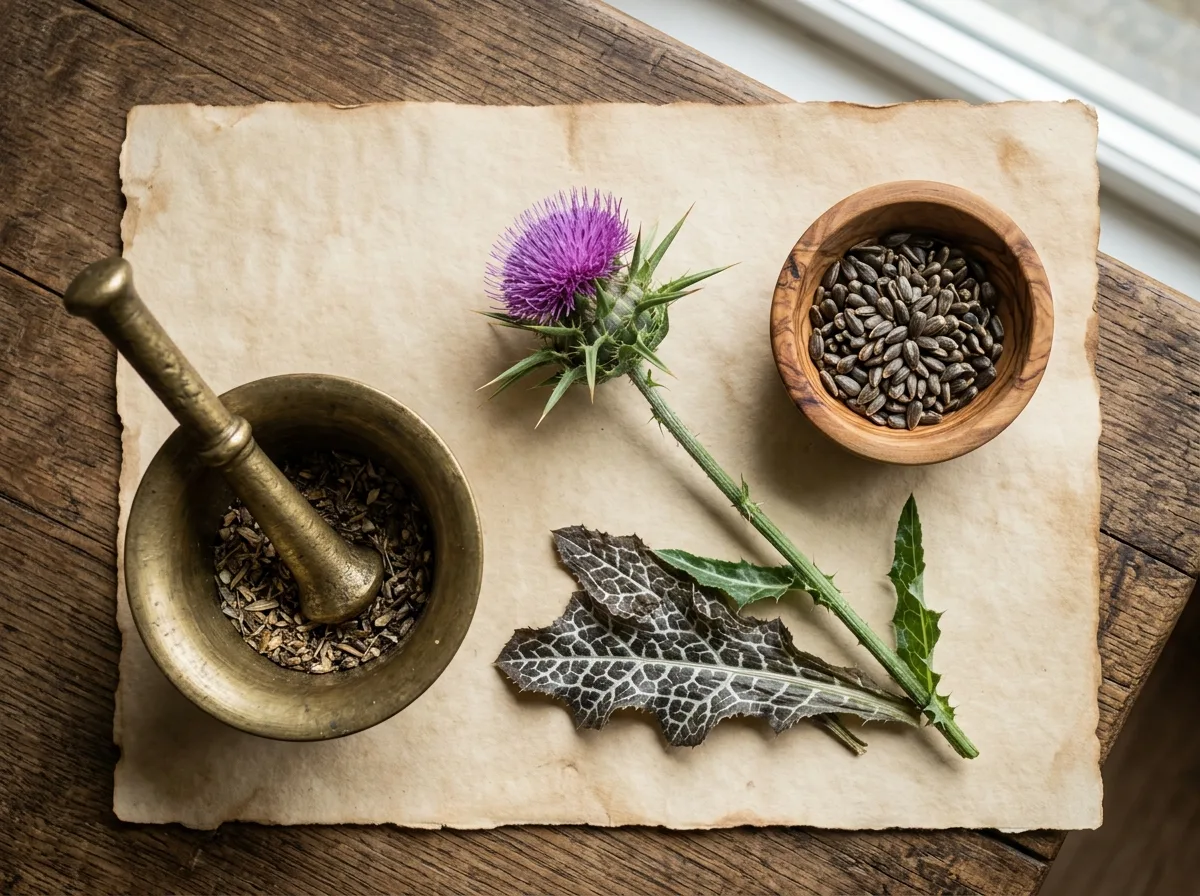
Die Mariendistel (Silybum marianum) ist eine hohe, stachelige ein- oder zweijährige Pflanze aus der Familie der Asteraceae — der gleichen Familie wie Gänseblümchen, Sonnenblumen und Löwenzahn. Trotz des rauen Aussehens ihrer stacheligen Blätter und Stängel bringt sie große, leuchtend violette Blütenköpfe hervor, die zu Büscheln dunkler, öliger Samen heranreifen. Es sind die Samen, nicht die Blüten oder Blätter, die die Wirkstoffe enthalten, für die die Pflanze seit über zweitausend Jahren in der Kräutermedizin verwendet wird.
Der englische Name 'milk thistle' (Milchdistel) bezieht sich auf die weiße Aderung der Blätter, die der mittelalterliche europäische Volksglaube Tropfen Milch der Jungfrau Maria zuschrieb — daher auch die alternativen Namen Mary Thistle und Holy Thistle. Der lateinische Gattungsname Silybum leitet sich vom griechischen Wort silybos ab, das vom Arzt Dioskurides im 1. Jahrhundert für eine ähnliche Distel verwendet wurde, während der Artname marianum die Marienreferenz ist. Der bulgarische Name бял трън ('weiße Distel') bezieht sich auf dieselben weißgeäderten Blätter.
Die Mariendistel ist eine der wenigen Heilpflanzen, deren botanische Identität über zwei Jahrtausende europäischer Kräuterliteratur stabil geblieben ist. Die gleiche Pflanze, die Plinius der Ältere im 1. Jahrhundert beschrieb, die gleiche Pflanze, über die mittelalterliche europäische Kräuterkenner in der Renaissance schrieben, und die gleiche Pflanze, die moderne Phytochemiker heute charakterisieren, sind alle Silybum marianum — das Wirkstoffprofil, die visuelle Identifikation und die traditionellen Verwendungen sind alle bemerkenswert konsistent geblieben.
Wo wächst die Mariendistel?
Silybum marianum ist im Mittelmeerraum, auf dem Balkan und in Teilen Westasiens beheimatet. Sie gedeiht auf trockenen, sonnigen, gut durchlässigen Böden — alten Weiden, Straßenrändern, Rändern bewirtschafteter Felder, unteren Berghängen. Es ist eine sonnenliebende, trockenheitstolerante Pflanze, die in kalten, feuchten Klimazonen schlecht gedeiht, weshalb ihr natürliches Verbreitungsgebiet auf der Höhe Mitteleuropas endet und sie hauptsächlich in den Mittelmeerländern kommerziell angebaut wird.
In Bulgarien wächst die Mariendistel wild von der Schwarzmeerküste durch die thrakische Tiefebene bis hinauf in die Ausläufer des Rhodopen-Gebirges. Die Kombination aus warmen, trockenen Sommern und gut durchlässigen, kalkhaltigen Böden in Südbulgarien hervorbringt einige der hochwertigsten wilden Silybum-marianum-Bestände Europas. Bulgarische wild gesammelte Mariendistel gilt weithin als saubere, unbehandelte Quelle — die Pflanze wächst in Gebieten mit sehr geringem landwirtschaftlichem Pestiziddruck, und die wild geernteten Samenköpfe sind typischerweise frei von Rückständen, die bei intensiv angebauten Lieferungen aus anderen Regionen ein Problem darstellen können.
Wilde Mariendistel wird im Spätsommer geerntet, wenn die stacheligen violetten Blütenköpfe zu einer braunen Hülle getrocknet sind und die Samen darin gereift sind. Traditionelle Sammler schneiden die Köpfe mit Handschuhen (die Stacheln sind schmerzhaft), dreschen die Samen von Hand aus und trocknen sie bei niedrigen Temperaturen. Die industrielle Ernte folgt demselben Prinzip, aber in größerem Maßstab.
Geschichte und traditionelle Verwendung
Der früheste schriftliche Hinweis auf die Mariendistel als Heilpflanze stammt vom römischen Naturforscher Plinius dem Älteren, der sie in seiner Naturgeschichte (Historia Naturalis) um 70 n. Chr. beschrieb. Plinius bemerkte, dass die Samen zur Unterstützung der Leber und der Galle verwendet wurden — was die Mariendistel zu einer der allerersten Pflanzen in der europäischen Literatur macht, die speziell mit der Lebergesundheit in Verbindung gebracht wird, eine Tradition, die seit fast zweitausend Jahren ununterbrochen geblieben ist.
Im Mittelalter blieb die Mariendistel ein fester Bestandteil der europäischen Kräuterpraxis. Der englische Arzt und Kräuterkundige Nicholas Culpeper aus dem 16. Jahrhundert schrieb in seinem Complete Herbal (1653), dass sie 'gut sei, um Verstopfungen von Leber und Milz zu öffnen' — und empfahl die Samen und Blätter als Abkochungen. Culpepers Kräuterbuch war einer der meistgelesenen medizinischen Texte im Europa des 17. und 18. Jahrhunderts und festigte den Ruf der Mariendistel als leberunterstützende Pflanze sowohl in der volkstümlichen als auch in der professionellen Kräuterkunde.
In Bulgarien und auf dem gesamten Balkan ist die Mariendistel mindestens seit dem Mittelalter ein fester Bestandteil der volkstümlichen Kräutermedizin. Die traditionelle bulgarische Kräuterpraxis verwendete Abkochungen der getrockneten Samen für die Leber und das Verdauungssystem, oft in Kombination mit anderen Bitterkräutern wie Löwenzahn (глухарче) und Klettenwurzel (репей). Diese Drei-Kräuter-Kombinationen — Mariendistel plus Löwenzahn plus Klette — erscheinen unabhängig voneinander in der Volksmedizin im gesamten Mittelmeerraum und in Osteuropa, was darauf hindeutet, dass sie sich aus ähnlichen empirischen Beobachtungen darüber entwickelten, wie diese bitteren, tiefwurzelnden Pflanzen den Verdauungs- und Leberkomfort zu unterstützen schienen.
Phytochemie: der Silymarin-Komplex
Die Wirkstoffe in den Mariendistelsamen sind in einem Komplex namens Silymarin konzentriert, der etwa 1,5 % bis 3 % des Trockengewichts des Samens ausmacht. Silymarin ist keine einzelne Substanz, sondern eine Mischung strukturell verwandter Flavonolignane — Moleküle, die die chemischen Strukturen von Flavonoiden und Lignanen kombinieren. Die Hauptbestandteile sind Silybin A und Silybin B (oft zusammen Silibinin genannt), Isosilybin A und B, Silychristin und Silydianin. Silybin gilt allgemein als pharmakologisch relevanteste Komponente, und moderne standardisierte Extrakte werden typischerweise auf einen spezifischen Silybin-Gehalt kalibriert.
Neben Silymarin enthalten Mariendistelsamen auch ein fettes Öl (etwa 20-30 % des Trockengewichts), das reich an Linol- und Ölsäure ist, sowie Pflanzensterine und eine kleine Menge Taxifolin (ein eng verwandtes Flavonoid). Das Profil des gesamten Samens ist chemisch komplexer als Silymarin allein, weshalb einige traditionelle Kräuterzubereitungen das gemahlene Samen anstelle eines isolierten Extrakts verwenden — die Begründung ist, dass die Matrix der Verbindungen möglicherweise effektiver zusammenwirkt als jedes einzelne isolierte Molekül.
Moderne Mariendistel-Extrakte werden typischerweise auf den Silymaringehalt standardisiert — am häufigsten auf 70 % oder 80 % Silymarin nach Gewicht. Ein 400-mg-Extrakt, der auf 80 % Silymarin standardisiert ist, liefert daher 320 mg Silymarin-Komplex pro Portion. Die Standardisierung ist wichtig, weil wildgesammelter Samen erheblich im Silymaringehalt variiert, abhängig von den Wachstumsbedingungen der Pflanze, dem Klima während der Reifung und dem Erntezeitpunkt — ohne Standardisierung wäre die Dosis des Wirkstoffkomplexes von Charge zu Charge unvorhersehbar.
Wie wird die Mariendistel heute verwendet?
Mariendistel ist heute am häufigsten als standardisierter Samenextrakt in Kapselform erhältlich, der zwischen 100 mg und 500 mg Extrakt pro Portion liefert. Dosen am oberen Ende dieses Bereichs (300-500 mg) spiegeln die moderne europäische Praxis wider, Mariendistel als 'sinnvolle', vollwertige Pflanze und nicht als symbolische Zugabe zu einer mehrstoffigen Formel zu verwenden. Die traditionelle Zubereitung — eine Abkochung oder ein Pulver aus dem ganzen zerkleinerten Samen — wird in einigen volkstümlichen Kräuterpraktiken noch verwendet, aber standardisierte Extrakte sind die dominante moderne Form, weil sie eine konsistente, messbare Dosis des Silymarin-Komplexes liefern.
Die meisten europäischen Kräutertraditionen empfehlen, Mariendistel zu einer Mahlzeit einzunehmen, insbesondere zur größten Mahlzeit des Tages. Es gibt keine bestimmte 'beste' Tageszeit für die Einnahme, aber Konsistenz ist wichtiger als das Timing — der Silymarin-Komplex ist fettlöslich, so dass die Einnahme mit einer Mahlzeit, die Nahrungsfette enthält, die Aufnahme verbessern kann. Die meisten Menschen nehmen es täglich über Wochen oder Monate ein, obwohl individuelle Reaktionen und Ziele variieren.
Es ist erwähnenswert, dass die Europäische Behörde für Lebensmittelsicherheit (EFSA) trotz der Tatsache, dass Mariendistel eine der am meisten untersuchten Heilpflanzen in der europäischen Phytotherapie ist, noch keine spezifische zugelassene gesundheitsbezogene Angabe für Silybum marianum erlassen hat. Dies stellt die Mariendistel in die breite Kategorie der 'traditionell verwendeten' pflanzlichen Zutaten in der EU-Nahrungsergänzungsmittelkennzeichnung — was bedeutet, dass die historische und traditionelle Verwendung gut dokumentiert ist, aber der regulatorische Rahmen spezifische medizinische Angaben mit Vorsicht behandelt. Von der EFSA zugelassene gesundheitsbezogene Angaben, die in Nahrungsergänzungsmittelkennzeichnungen für Mariendistelprodukte verwendet werden, beziehen sich typischerweise auf andere Inhaltsstoffe der Formel.
Sicherheit und Wechselwirkungen
Mariendistel hat in der Kräuterliteratur ein ausgezeichnetes Sicherheitsprofil. Nebenwirkungen bei normalen Ergänzungsdosen sind selten und mild — gelegentliche leichte Magen-Darm-Beschwerden (lockerer Stuhl, Blähungen) wurden berichtet, lösen sich aber typischerweise von selbst auf. Die Pflanze wird seit zweitausend Jahren in der europäischen Kräuterpraxis ohne signifikante Toxizitätsbedenken verwendet, und moderne phytochemische Studien haben keine größeren Sicherheitsprobleme bei typischen Ergänzungsdosen festgestellt.
Die Hauptüberlegung bei Mariendistel sind mögliche Wechselwirkungen mit verschreibungspflichtigen Medikamenten. Silymarin kann theoretisch die Aktivität bestimmter Leberenzyme (insbesondere des Cytochrom-P450-Systems) beeinflussen, die viele gängige Medikamente metabolisieren. Die praktische Bedeutung dieser Wechselwirkung variiert je nach Medikament und wird bei typischen Ergänzungsdosen im Allgemeinen als gering angesehen, aber jeder, der verschreibungspflichtige Medikamente einnimmt — insbesondere Blutverdünner, Statine oder Medikamente mit engem therapeutischem Fenster — sollte vor Beginn einer Mariendistel-Ergänzung seinen Arzt konsultieren.
Mariendistel wird während der Schwangerschaft oder Stillzeit im Allgemeinen nicht empfohlen, nicht wegen identifizierter Schäden, sondern weil unzureichende Forschung zur Bestätigung der Sicherheit in diesen Bevölkerungsgruppen vorliegt. Wie bei allen pflanzlichen Nahrungsergänzungsmitteln sollte jeder, der schwanger ist, stillt, eine Schwangerschaft plant oder eine bekannte medizinische Erkrankung hat, vor Beginn eines neuen Nahrungsergänzungsmittels seinen Arzt konsultieren. Menschen mit Allergien gegen andere Pflanzen der Asteraceae-Familie (Ambrosia, Gänseblümchen, Ringelblumen, Chrysanthemen) sollten ebenfalls Vorsicht walten lassen, da Kreuzreaktivität mit Mariendistel theoretisch möglich ist.
Frequently asked questions
Was ist Silymarin und wie unterscheidet es sich von Mariendistel? ▾
Silymarin ist der Name für den Komplex von Wirkstoffen, die in den Mariendistelsamen enthalten sind — hauptsächlich Silybin A und B, Isosilybin, Silychristin und Silydianin. Mariendistel ist die Pflanze; Silymarin ist der Wirkstoffkomplex. Wenn Sie ein Nahrungsergänzungsmittel-Etikett sehen, auf dem 'Mariendistel-Extrakt standardisiert auf 80 % Silymarin' steht, bedeutet das, dass der Extrakt verarbeitet und getestet wurde, um sicherzustellen, dass er 80 % des Silymarin-Komplexes nach Gewicht enthält.
Welche Dosis Mariendistel sollte ich einnehmen? ▾
Europäische Nahrungsergänzungsmittel verwenden typischerweise Dosen im Bereich von 100 mg bis 500 mg Mariendistel-Extrakt pro Portion. Die traditionelle 'sinnvolle' Ergänzungsdosis — verwendet in Formeln, in denen Mariendistel die Eckpfeiler-Zutat und nicht eine symbolische Zugabe ist — beträgt 400 mg oder mehr standardisierten Extrakt pro Tag, mit einer Mahlzeit eingenommen. Befolgen Sie immer die Dosierungsempfehlungen auf dem Etikett des spezifischen Produkts, das Sie einnehmen.
Woher stammt Mariendistel? ▾
Mariendistel ist im Mittelmeerraum, auf dem Balkan und in Teilen Westasiens beheimatet. Heute wird sie wild gesammelt und kommerziell in Südeuropa angebaut, einschließlich Bulgarien, Griechenland, Italien, Spanien und Teilen des Balkans. Bulgarische wild gesammelte Mariendistel aus den Ausläufern der Rhodopen und der Thrakischen Tiefebene gilt aufgrund des geringen landwirtschaftlichen Pestiziddrucks in den Sammelgebieten als eine der saubersten Quellen Europas.
Kann ich Mariendistel zusammen mit Medikamenten einnehmen? ▾
Mariendistel kann theoretisch den Stoffwechsel bestimmter verschreibungspflichtiger Medikamente über das Leberenzymsystem (insbesondere die Cytochrom-P450-Enzyme) beeinflussen. Die praktische Bedeutung variiert je nach Medikament, aber jeder, der verschreibungspflichtige Medikamente einnimmt — insbesondere Blutverdünner, Statine oder Medikamente mit einem engen therapeutischen Fenster — sollte vor Beginn der Einnahme von Mariendistel seinen Arzt konsultieren.
Ist Mariendistel in der Schwangerschaft sicher? ▾
Mariendistel wird während der Schwangerschaft oder Stillzeit im Allgemeinen nicht empfohlen — nicht weil ein Schaden festgestellt wurde, sondern weil unzureichende Forschung zur Bestätigung der Sicherheit in diesen Bevölkerungsgruppen vorliegt. Wie bei allen pflanzlichen Nahrungsergänzungsmitteln konsultieren Sie bitte Ihren Arzt, bevor Sie ein Nahrungsergänzungsmittel einnehmen, wenn Sie schwanger sind, stillen oder eine Schwangerschaft planen.
Hat Mariendistel von der EFSA zugelassene gesundheitsbezogene Angaben? ▾
Es existiert derzeit keine spezifische von der EFSA zugelassene gesundheitsbezogene Angabe für Silybum marianum (Mariendistel). Sie wird als traditionell verwendete Pflanze in der EU-Nahrungsergänzungsmittelregulierung behandelt — ihre historische Verwendung ist gut dokumentiert, aber der regulatorische Rahmen erfordert moderne klinische Studiendaten für spezifische gesundheitsbezogene Angaben, und Mariendistel hat noch keine zugelassene Angabe erhalten. Viele Mariendistelprodukte tragen stattdessen EFSA-Angaben für andere Inhaltsstoffe in der Formel.
Wie lange wird Mariendistel in der europäischen Kräuterkunde verwendet? ▾
Der früheste schriftliche Hinweis auf Mariendistel als Heilpflanze stammt vom römischen Naturforscher Plinius dem Älteren, der sie in seiner Naturgeschichte um 70 n. Chr. beschrieb — was die dokumentierte europäische Verwendung etwa 2.000 Jahre alt macht. Die Pflanze war ein fester Bestandteil der mittelalterlichen europäischen Kräutermedizin, wurde prominent in Nicholas Culpepers Complete Herbal (1653) erwähnt und ist seitdem ununterbrochen ein Eckpfeiler der europäischen Phytotherapie geblieben.
Was ist der Unterschied zwischen Mariendistel und Löwenzahn? ▾
Mariendistel (Silybum marianum) und Löwenzahn (Taraxacum officinale) gehören beide zur Asteraceae-Familie und beide wurden in der europäischen Kräuterkunde als 'Lebertonika' verwendet, aber sie sind verschiedene Pflanzen mit unterschiedlichen Wirkstoffprofilen. Mariendistel enthält den Silymarin-Komplex aus Flavonolignanen, der in den Samen konzentriert ist, während Löwenzahn Sesquiterpenlactone (das Bitterprinzip), Inulin und verschiedene Polyphenole in der gesamten Pflanze enthält. Die beiden werden oft in traditionellen europäischen Kräuterformeln kombiniert, weil sie als ergänzend und nicht als redundant angesehen werden.