Wellness guide
Digestive Comfort: A Complete Guide
Understanding your digestive system, the role of fibre and the gut microbiome, and the traditional 3-phase approach to digestive support
How does digestion work?
Digestion is the process by which your body breaks down food into nutrients that can be absorbed and used for energy, growth and repair. It begins the moment food enters your mouth. Chewing breaks food into smaller pieces, while salivary amylase — an enzyme in saliva — starts the chemical breakdown of starches. This is why thoroughly chewing your food is more than just good manners: it is the first critical step in a long chain of biochemical events.
From the mouth, the chewed food bolus travels down the oesophagus via rhythmic muscular contractions called peristalsis. It enters the stomach, where hydrochloric acid and pepsin begin breaking down proteins. The stomach also acts as a holding chamber, gradually releasing its contents into the small intestine over a period of two to five hours, depending on the meal composition.
The small intestine is where the majority of digestion and nutrient absorption takes place. It is roughly six metres long in an adult and lined with millions of finger-like projections called villi, which dramatically increase the surface area available for absorption. Here, bile from the liver and gallbladder emulsifies fats, while pancreatic enzymes continue the breakdown of carbohydrates, proteins and fats into their component molecules.
Intestinal motility — the coordinated muscular contractions that move food through the digestive tract — is essential for healthy digestion. These contractions are controlled by the enteric nervous system, sometimes called the "second brain," which contains around 500 million neurons. This complex network operates largely independently of the central nervous system, coordinating the precise timing and strength of contractions needed to move food at the right pace.
The large intestine, or colon, is the final major station. Here, water and electrolytes are reabsorbed, and the resident gut microbiome — a community of trillions of bacteria, fungi and other microorganisms — ferments remaining dietary fibre, producing short-chain fatty acids that nourish the cells lining the colon. The diversity and balance of this microbial community play a significant role in digestive comfort, immune function and even mood regulation through the gut-brain axis.
What affects digestive comfort?
Low fibre intake is one of the most widespread dietary factors affecting digestive comfort in Europe. The European Food Safety Authority recommends at least 25 grams of dietary fibre per day for normal bowel function. Yet population surveys consistently show that average intake across most EU member states falls well below this level — in many countries, average consumption is between 15 and 20 grams per day. This shortfall has direct consequences for intestinal transit time and stool consistency.
A sedentary lifestyle has a well-documented effect on digestive function. Physical activity stimulates peristalsis — the muscular contractions that propel food through the intestines. Prolonged sitting, which is increasingly common in modern office-based work, is associated with slower intestinal transit and a higher incidence of constipation. The European Health Interview Survey found that approximately one-third of adults in the EU engage in insufficient physical activity.
Stress and the gut-brain axis represent a bidirectional relationship that significantly influences digestive comfort. The vagus nerve forms a direct communication pathway between the brain and the gastrointestinal tract. Psychological stress can alter gut motility, increase visceral sensitivity, and change the composition of the gut microbiome. Conversely, gut disturbances can signal the brain and influence mood and anxiety levels. This is why digestive discomfort often worsens during periods of high stress.
Dietary changes and travel frequently disrupt established digestive rhythms. Sudden shifts in meal timing, cuisine type, water composition and time zones can all affect gut motility and microbiome balance. This is a common experience for the millions of Europeans who travel regularly for work or leisure. Age-related changes also play a role: production of stomach acid and digestive enzymes tends to decline gradually after age 50, and colonic transit time often increases with age.
Certain medications can affect digestive comfort as a side effect. Antibiotics, while essential for treating bacterial infections, can disrupt the gut microbiome by killing beneficial bacteria along with harmful ones. Non-steroidal anti-inflammatory drugs (NSAIDs) can irritate the stomach lining. Opioid-based pain medications slow intestinal motility. Iron supplements are commonly associated with constipation. If you experience persistent digestive changes after starting a new medication, consult your prescribing physician.
The 3-phase approach to digestive support
Traditional herbal medicine across multiple cultures has converged on a remarkably consistent framework for digestive support that can be described in three phases: stimulate, bulk and soothe, then rebalance. This approach recognises that occasional digestive sluggishness is best addressed not by a single mechanism but by a combination of complementary actions — short-term stimulation of motility, increased dietary bulk and mucilaginous soothing, followed by longer-term microbiome support.
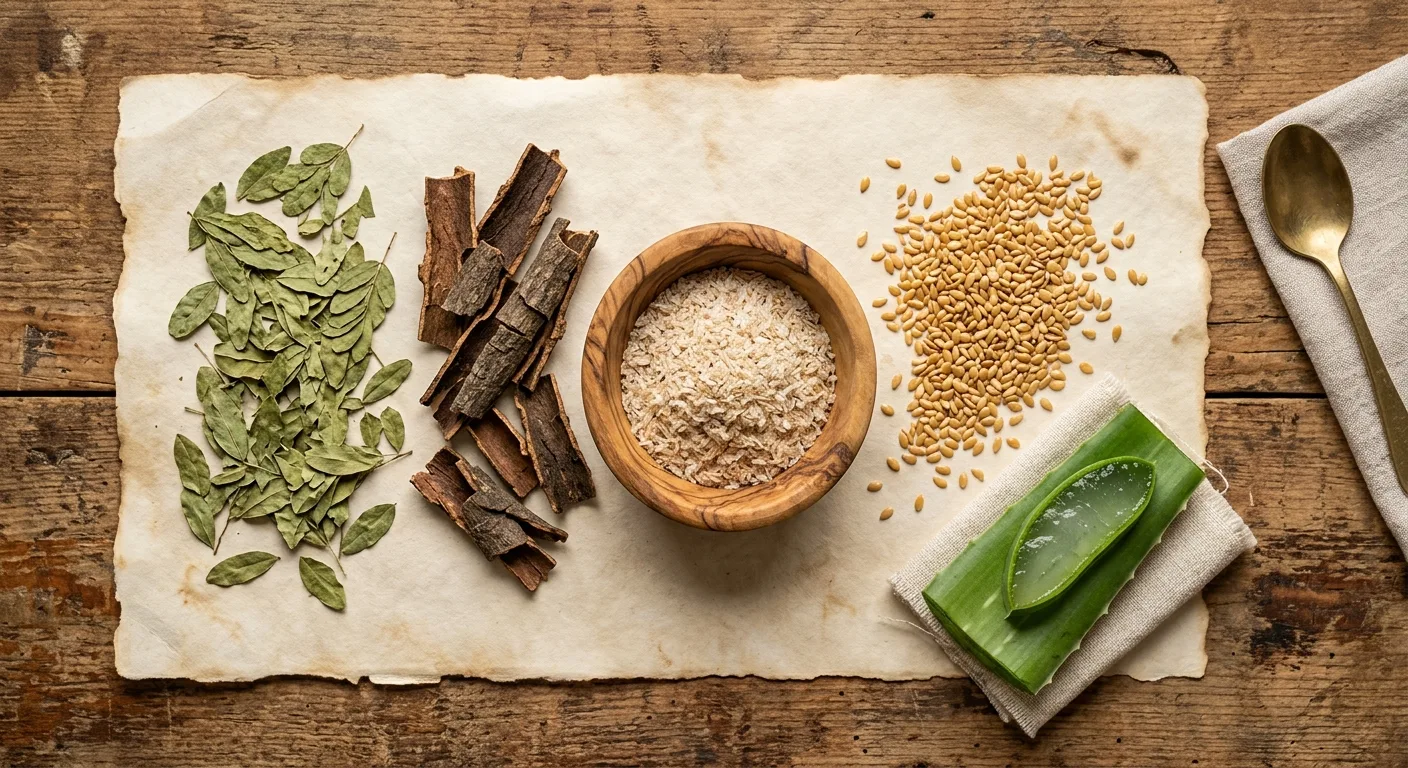
Phase 1 centres on stimulant herbs that promote intestinal motility. Senna leaf (Senna alexandrina) has been used in Arabic and European herbal traditions for centuries. Arab physicians documented its use as early as the 9th century, and it entered European pharmacopoeias via trade routes through the Mediterranean. Cascara sagrada (Rhamnus purshiana) has its roots in the indigenous traditions of the Pacific Northwest, where Native American peoples used the aged bark long before European contact. Both herbs contain anthraquinone glycosides — compounds that stimulate the smooth muscle of the intestinal wall, promoting contractions that help move contents through the colon.
Important safety note: stimulant herbs containing anthraquinone glycosides are intended for short-term, occasional use only. They should not be used for more than one to two weeks consecutively. Long-term use can lead to dependence, electrolyte imbalances and a condition called melanosis coli. They are not suitable for use during pregnancy or breastfeeding. Always follow dosage instructions and consult a healthcare professional if you have a pre-existing medical condition.
Phase 2 introduces fibre and mucilaginous plants that add bulk to the intestinal contents and soothe the digestive lining. Psyllium husk (Plantago ovata) has been used in Ayurvedic medicine for thousands of years and is one of the richest natural sources of soluble fibre. When mixed with water, it forms a viscous gel that absorbs many times its own weight, softening stool and promoting gentle, regular transit. Flaxseed (Linum usitatissimum) has been cultivated in Europe since the Neolithic period and provides both soluble and insoluble fibre, along with lignans and omega-3 fatty acids. Aloe vera gel contains mucilaginous polysaccharides — long-chain sugar molecules that form a soothing layer on the intestinal mucosa.
Phase 3 focuses on rebalancing the gut microbiome. Lactobacillus acidophilus is one of the most widely studied probiotic strains. It is a naturally occurring resident of the human intestinal tract that produces lactic acid, helping maintain an acidic environment in the gut that discourages the growth of harmful bacteria. Probiotic supplementation can be particularly beneficial after courses of antibiotics or during periods of dietary disruption.
Fibre — why most Europeans do not get enough
Dietary fibre is the collective term for the indigestible parts of plant foods that pass through the human digestive system largely intact. Despite being indigestible, fibre plays critical roles in digestive health. EFSA recommends at least 25 grams per day for adults, and some national guidelines suggest even higher targets of 30 grams or more. Yet data from nutrition surveys across the EU consistently indicate that average fibre intake falls between 15 and 22 grams per day in most member states — a significant gap.
Soluble fibre dissolves in water to form a viscous gel. This gel slows the passage of food through the upper digestive tract, which helps regulate the rate of nutrient absorption — particularly glucose, which is why soluble fibre is associated with more stable blood sugar levels after meals. In the colon, soluble fibre is fermented by gut bacteria into short-chain fatty acids such as butyrate, propionate and acetate. Butyrate is the primary energy source for colonocytes — the cells that line the colon — and plays a role in maintaining the integrity of the intestinal barrier.
Insoluble fibre does not dissolve in water. Instead, it adds bulk to the stool and acts like a broom sweeping through the colon, stimulating peristalsis and reducing transit time. This type of fibre is found abundantly in whole grains, vegetables and the outer husks of seeds. Psyllium husk is particularly notable because it provides predominantly soluble fibre — roughly 70% soluble and 30% insoluble — making it an efficient concentrated source. Flaxseed is unusual among plant foods in providing both soluble and insoluble fibre in near-equal proportions, along with lignans (plant compounds with antioxidant properties) and alpha-linolenic acid, a plant-based omega-3 fatty acid.
Practical dietary tips for increasing fibre intake include: choosing whole grain bread, pasta and cereals over refined versions; eating at least five portions of fruit and vegetables per day; including legumes (beans, lentils, chickpeas) in meals several times per week; snacking on nuts and seeds instead of processed foods; and leaving the skin on potatoes, apples and pears where possible. When increasing fibre intake, do so gradually over two to three weeks to give the gut microbiome time to adapt — a sudden large increase can cause temporary bloating and gas.
Practical tips for digestive comfort
Increase your fibre intake gradually. A sudden jump from 15 to 30 grams of fibre per day can overwhelm the gut microbiome and cause temporary bloating, gas and cramping. Instead, add an extra 3 to 5 grams per week over a period of two to three weeks. This gives the colonic bacteria time to adjust their populations and enzyme profiles to handle the increased substrate. Keep a rough mental note of fibre-rich foods you eat each day to gauge progress.
Stay well hydrated, especially when consuming fibre supplements or fibre-rich foods. Soluble fibre absorbs water to form its gel-like consistency — if there is not enough water available, the opposite of the intended effect can occur, and stool may become harder rather than softer. Aim for at least 1.5 to 2 litres of water per day, and consider increasing this if you are physically active or live in a warm climate. Water, herbal teas and diluted fruit juices all count toward this goal.
Move regularly. Physical activity is one of the most effective non-dietary strategies for supporting digestive comfort. Even moderate exercise — a 30-minute walk, cycling or swimming — can measurably improve colonic transit time. The effect is partly mechanical (the physical motion of the body helps move intestinal contents) and partly neurological (exercise stimulates the parasympathetic nervous system, which promotes peristalsis). Consistency matters more than intensity: daily movement is more beneficial than occasional vigorous exercise.
Manage stress proactively. Given the powerful connection between the brain and the gut, stress management is a legitimate digestive health strategy. Techniques with evidence of benefit include diaphragmatic breathing, progressive muscle relaxation, mindfulness meditation and regular physical activity. Even brief daily practice — 10 minutes of focused breathing or a short walk in nature — can have a meaningful effect on gut-brain axis signalling and, consequently, on digestive comfort.
Know when to see a doctor. While occasional digestive discomfort is common and usually benign, certain symptoms warrant prompt medical attention. These red flags include: blood in the stool (red or black), unexplained weight loss, persistent changes in bowel habits lasting more than three weeks, severe abdominal pain, difficulty swallowing, and persistent vomiting. These symptoms do not necessarily indicate a serious condition, but they should always be evaluated by a qualified medical professional to rule out conditions that require treatment.
Frequently asked questions
Are stimulant herbs like senna and cascara sagrada safe? ▾
When used as directed and for short periods only (no more than one to two weeks consecutively), senna and cascara sagrada have a long history of traditional use and are generally well tolerated by most adults. However, they are not suitable for long-term use. Prolonged use of anthraquinone-containing stimulant laxatives can lead to electrolyte imbalances, dependence on laxatives for bowel movements, and a condition called melanosis coli. They should not be used during pregnancy, breastfeeding, or by children. Consult a healthcare professional before use if you take other medications or have a pre-existing digestive condition.
Can I use stimulant herbs for longer than two weeks? ▾
No. Stimulant herbs containing anthraquinone glycosides — including senna leaf and cascara sagrada bark — are strictly for short-term, occasional use. Using them for more than one to two consecutive weeks is not recommended by any major pharmacopoeia or regulatory body. If you experience constipation that persists beyond two weeks, consult a doctor rather than continuing stimulant herb use. Long-term constipation may indicate an underlying condition that requires medical evaluation, and chronic stimulant laxative use can worsen the problem over time.
What are probiotics and how do they support digestion? ▾
Probiotics are live microorganisms that, when consumed in adequate amounts, confer a health benefit on the host. Lactobacillus acidophilus is one of the most studied probiotic strains. It is a natural resident of the human gut that produces lactic acid, maintaining an acidic environment that supports the growth of beneficial bacteria while discouraging harmful ones. Probiotics may help restore microbiome balance after disruptions such as antibiotic use, travel or dietary changes. They do not colonise the gut permanently — their effects are maintained through regular consumption.
Why is it important to drink water when taking fibre supplements? ▾
Soluble fibre works by absorbing water and forming a soft, gel-like mass that moves smoothly through the intestines. Without adequate water, this mechanism cannot work properly — the fibre may actually absorb moisture from the intestinal contents and make stool harder and more difficult to pass. This is especially important with concentrated fibre sources like psyllium husk, which can absorb up to 40 times its weight in water. Always take fibre supplements with at least a full glass of water (200 to 250 ml) and maintain good hydration throughout the day.
Can I take digestive herbal supplements during pregnancy? ▾
Stimulant herbs containing anthraquinone glycosides — such as senna leaf and cascara sagrada — should not be used during pregnancy or breastfeeding. These compounds can stimulate uterine contractions and may pass into breast milk. Fibre supplements such as psyllium husk are generally considered safe during pregnancy and are commonly recommended by healthcare providers for pregnancy-related constipation, but you should always consult your obstetrician or midwife before starting any new supplement during pregnancy or breastfeeding.
Can digestive supplements interact with medications? ▾
Yes, some interactions are possible. Fibre supplements — particularly psyllium husk — can slow the absorption of certain medications if taken at the same time. As a general rule, take fibre supplements at least one to two hours before or after other medications. Stimulant herbs that increase intestinal motility may reduce the time available for medication absorption. Probiotics are generally well tolerated alongside most medications, but if you take immunosuppressants, consult your doctor before using probiotic supplements. Always inform your healthcare provider about all supplements you take.
Why do I feel bloated when I start eating more fibre? ▾
This is a common and usually temporary experience. When you increase fibre intake, the bacteria in your colon receive more substrate to ferment. This fermentation produces gas — primarily hydrogen, methane and carbon dioxide — which can cause bloating, flatulence and mild cramping. The good news is that this effect typically diminishes within one to three weeks as the gut microbiome adapts. The key is to increase fibre intake gradually (3 to 5 grams per week), drink plenty of water, and allow your body time to adjust. If bloating persists beyond three weeks or is accompanied by pain, consult your doctor.
What is the difference between a food supplement and a medicine? ▾
A food supplement is intended to supplement the normal diet and is not designed to treat, cure or prevent any disease. It falls under food law (Directive 2002/46/EC in the EU) and must carry the statement that it is not a substitute for a varied and balanced diet. Health claims on supplements must be authorised by EFSA. A medicine, by contrast, is subject to pharmaceutical regulation, requires clinical trials to demonstrate efficacy and safety, and is intended to treat or prevent specific medical conditions. If you have a diagnosed digestive condition, follow the treatment plan prescribed by your doctor — supplements are not a replacement for medical treatment.