Wellness guide
Liver Health: A Complete Guide
Understanding your liver, the European tradition of bitter herbs, and the vitamins and minerals that support normal liver function
What does the liver do?
The liver is the body's largest internal organ, weighing roughly 1.5 kilograms in an adult. Tucked beneath the right side of the ribcage, it receives around 1.5 litres of blood every minute through two separate blood supplies: the hepatic artery brings oxygen-rich blood from the heart, while the portal vein delivers nutrient-laden blood from the digestive tract. This dual supply makes the liver the body's primary metabolic processing centre.
Scientists have identified over 500 separate functions that the liver performs. Among the most important are detoxification, bile production, fat metabolism, protein synthesis, glycogen storage, and the regulation of blood clotting factors. The liver filters and neutralises harmful substances — including alcohol, metabolic waste products, and environmental pollutants — converting them into forms that can be safely excreted. It produces bile, which is essential for the digestion and absorption of dietary fats and fat-soluble vitamins (A, D, E, K).
Perhaps most remarkably, the liver is the only internal organ capable of significant regeneration. If up to 75 percent of liver tissue is removed or damaged, the remaining tissue can regrow to its original size within weeks, provided the underlying cause of damage is addressed. This extraordinary resilience underscores the liver's importance — but it also means that liver problems can develop silently, because the organ compensates for damage long before symptoms appear.
Everything you eat, drink, and breathe ultimately passes through the liver. It processes nutrients from digestion, stores vitamins and minerals, manufactures cholesterol and essential proteins, and regulates blood sugar by converting excess glucose into glycogen for storage. When the body needs energy between meals, the liver converts glycogen back into glucose and releases it into the bloodstream. In short, the liver is central to virtually every metabolic process in the body.
What puts pressure on the liver?
The modern Western diet presents a significant workload for the liver. Processed foods often contain refined sugars, unhealthy fats, artificial additives, and preservatives — all of which the liver must metabolise. Excessive sugar consumption, in particular, can lead to fat accumulation in the liver. Across the European Union, rates of non-alcoholic fatty liver disease have been rising steadily, with some estimates suggesting that up to one in four adults may be affected.
Alcohol is one of the best-known liver stressors. When you drink alcohol, the liver prioritises its breakdown over other metabolic tasks. The enzyme alcohol dehydrogenase converts ethanol into acetaldehyde, a toxic compound that is then further processed into acetate. Chronic heavy drinking overwhelms this process, leading to inflammation, fat deposition, and ultimately fibrosis. Even moderate alcohol consumption requires consistent liver effort.
Environmental toxins and pollutants also add to the liver's workload. Pesticide residues on food, industrial chemicals, heavy metals, and airborne pollutants are all processed by the liver's detoxification pathways. Many common medications — including paracetamol (acetaminophen), statins, and non-steroidal anti-inflammatory drugs — are metabolised by the liver. This is why doctors monitor liver function when prescribing certain long-term medications.
A sedentary lifestyle can compound these factors. Regular physical activity supports healthy blood flow to the liver and helps regulate body weight — excess body fat, particularly visceral fat around the abdomen, is closely associated with fatty liver disease. Age-related changes in liver blood flow and enzyme activity can also gradually reduce the liver's processing efficiency over time, making lifestyle choices increasingly relevant as we age.
The European tradition of liver-supporting herbs
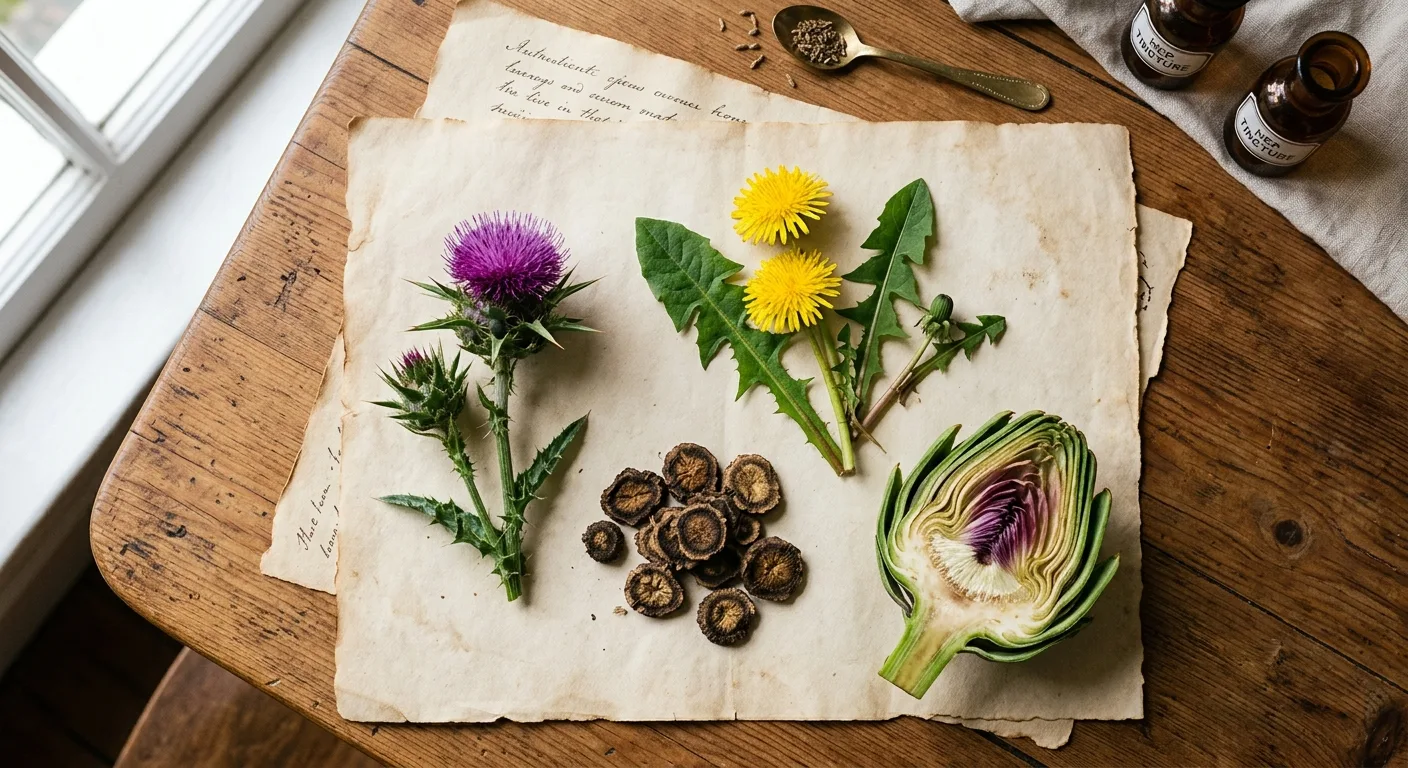
Bitter herbs have been the cornerstone of European liver herbalism for centuries. From the Mediterranean basin to Eastern Europe, folk medicine traditions independently arrived at a remarkably similar set of plants for liver comfort. The common thread is bitterness: the bitter compounds in these plants stimulate digestive secretions, including bile flow, and have been valued by herbalists since antiquity. Four plants stand out in this tradition: milk thistle, dandelion, burdock root, and artichoke.
Milk thistle (Silybum marianum) has arguably the longest documented history of liver use among European herbs. Ancient Greek physician Dioscorides described its properties in the first century CE, and its use has been continuously documented for over 2,000 years. The plant's active complex — a group of flavonolignans collectively known as silymarin — is concentrated in the seeds. Silymarin comprises several related compounds including silybin, silydianin, and silychristin. Bulgaria's Rhodope mountains remain one of Europe's premier wild-harvest regions for milk thistle, where the plant grows abundantly at elevations between 400 and 1,200 metres.
Dandelion (Taraxacum officinale) exemplifies the European whole-plant tradition. The leaves, roots, and flowers have all been used historically, though the root is most strongly associated with liver support in traditional herbalism. The bitter principle in dandelion — derived from sesquiterpene lactones such as taraxacin — stimulates digestive secretions. Dandelion root also contains significant amounts of inulin, a prebiotic fibre. Across Central and Eastern Europe, dandelion root has been a staple of spring-cleansing tonics, traditionally consumed as a tea or tincture after winter.
Burdock root (Arctium lappa) has been used across European folk medicine as a traditional 'blood purifier' — a term that historically encompassed general support for the body's elimination pathways. Burdock root is particularly rich in inulin (up to 45 percent of dry weight) and contains arctiopicrin, a sesquiterpene lactone with bitter properties. The root also provides modest amounts of polyacetylenes and phenolic acids. In European folk tradition, burdock root was commonly prepared as a decoction or incorporated into bitter tonic formulas alongside other liver-supporting herbs.
Artichoke leaf (Cynara scolymus) rounds out this quartet. While the flower head is a familiar culinary ingredient, it is the leaf — not the head — that features in European herbal tradition for liver and digestive support. The primary active compound is cynarin, a caffeoylquinic acid found in the leaves. The Roman naturalist Pliny the Elder recorded artichoke's use in the first century CE, and the plant has remained a fixture of Mediterranean herbalism ever since. It is important to note that artichoke leaf extract is distinct from the artichoke hearts found on your dinner plate.
What is particularly striking is that the combination of milk thistle, dandelion, and burdock root appears independently in folk medicine traditions from the Balkans to the Alps to the Mediterranean coast. While herbalists in different regions used locally available species, they converged on a remarkably similar three-herb bitter formula for liver comfort. Artichoke leaf joined this tradition primarily in the Mediterranean and Western European regions, where the plant is native. Each of these four herbs is explored in depth in its own ingredient article on this site.
Supporting vitamins and minerals
Several vitamins and minerals carry EFSA-approved health claims relevant to metabolic processes closely associated with liver function. Vitamin B1 (thiamine) and vitamin B12 both contribute to normal energy-yielding metabolism — a process in which the liver plays a central role. Folic acid contributes to normal amino acid synthesis, another liver-centred metabolic function. Together, B-vitamins support the complex network of enzymatic reactions that the liver coordinates daily.
Zinc contributes to normal protein synthesis and to the protection of cells from oxidative stress — both EFSA-approved claims. The liver is the body's largest protein-manufacturing site, synthesising albumin, clotting factors, and hundreds of other proteins. Zinc is also a cofactor for more than 300 enzymes, many of which are active in the liver. Biotin contributes to normal macronutrient metabolism (EFSA-approved), supporting the liver's role in processing carbohydrates, proteins, and fats from the diet.
It is worth emphasising that all of the health claims mentioned in this section are EFSA-approved and legally authorised under EU Regulation 432/2012. They describe the contributions of individual nutrients to normal body functions — they do not claim to treat, cure, or prevent any disease. A varied and balanced diet is normally sufficient to provide these nutrients, but supplementation may be considered when dietary intake is insufficient.
Practical tips for supporting liver wellness
A balanced diet rich in vegetables, fruits, whole grains, lean proteins, and healthy fats provides the liver with the raw materials it needs to function optimally. Cruciferous vegetables (broccoli, cabbage, Brussels sprouts) contain compounds that support the liver's detoxification enzymes. Limiting processed foods, refined sugars, and trans fats reduces the metabolic burden on the liver. Staying well hydrated supports the liver's ability to process and eliminate waste products efficiently.
If you consume alcohol, moderation is key. EU and national health guidelines generally recommend limiting intake to no more than one standard drink per day for women and two for men, with several alcohol-free days each week. Even within these guidelines, less is better from the liver's perspective. Regular physical activity — at least 150 minutes of moderate-intensity exercise per week, as recommended by the WHO — supports healthy liver function by promoting blood flow, helping to maintain a healthy body weight, and supporting overall metabolic health.
Be mindful of medications and supplements. Because the liver metabolises most pharmaceutical drugs, always follow prescribing guidelines and inform your doctor about all supplements you are taking. Paracetamol (acetaminophen) is safe at recommended doses but can cause severe liver damage in overdose — never exceed the stated maximum daily dose. Consult a healthcare professional before combining multiple supplements or starting any new supplement alongside existing medication.
Finally, know when to see a doctor. Many liver conditions develop silently, so routine blood tests that include liver function markers (ALT, AST, GGT, bilirubin) are a sensible part of preventive healthcare. See a doctor promptly if you notice persistent fatigue, unexplained weight loss, yellowing of the skin or eyes (jaundice), dark urine, pale stools, abdominal swelling, or persistent nausea. These may indicate conditions that require professional diagnosis and treatment. Supplements are not a substitute for medical care.
Frequently asked questions
What are the main functions of the liver? ▾
The liver performs over 500 functions, including detoxification of harmful substances, bile production for fat digestion, protein synthesis, glycogen storage for energy regulation, metabolism of medications, and regulation of blood clotting factors. It processes virtually everything you eat, drink, and breathe.
When should I see a doctor about liver health? ▾
See a doctor promptly if you notice persistent fatigue, unexplained weight loss, yellowing of the skin or eyes (jaundice), dark urine, pale stools, abdominal swelling, or persistent nausea. Because many liver conditions develop silently, routine blood tests that include liver function markers (ALT, AST, GGT, bilirubin) are recommended as part of regular check-ups.
What is the difference between a supplement and a medicine? ▾
Food supplements are intended to supplement a normal diet and are not designed to treat, cure or prevent diseases. They are regulated as foods under EU law and may only carry EFSA-authorised health claims. Medicines, by contrast, undergo clinical trials and are authorised to treat specific medical conditions. If you have a liver condition, always consult your doctor.
Does alcohol always damage the liver? ▾
The liver must prioritise alcohol metabolism whenever alcohol is consumed, temporarily diverting resources from other metabolic tasks. Chronic heavy drinking can lead to inflammation, fat accumulation, fibrosis, and eventually cirrhosis. Even moderate drinking requires consistent liver effort. EU and national health guidelines recommend limiting intake and having several alcohol-free days each week. Less is always better from the liver's perspective.
What does 'EFSA-approved health claim' mean? ▾
The European Food Safety Authority (EFSA) is an independent EU agency that evaluates scientific evidence behind health claims made about foods and supplements. When a claim is 'EFSA-approved', it means the scientific panel has reviewed the available evidence and concluded that the relationship between the nutrient and the stated health benefit is supported. These claims are legally authorised under EU Regulation 432/2012.
How long should I take a liver supplement? ▾
Supplements are generally designed for ongoing daily use as part of a balanced diet and healthy lifestyle. Most people begin to notice the full effect of herbal supplements after several weeks of consistent daily use. Always follow the dosage instructions on the product label and consult your doctor if you have questions about long-term use.
Are liver supplements safe during pregnancy? ▾
Pregnant and breastfeeding women should always consult their doctor before taking any supplement, including herbal ones. Some herbs may not be recommended during pregnancy. Your healthcare provider can advise you on what is safe and appropriate for your individual situation during this important time.
What is fatty liver disease? ▾
Fatty liver disease occurs when excess fat accumulates in liver cells. The non-alcoholic form (NAFLD) is associated with factors such as excess body weight, a high-sugar diet, insulin resistance, and a sedentary lifestyle. Some estimates suggest that up to one in four EU adults may be affected. In its early stages, fatty liver disease often has no symptoms and is typically detected through routine blood tests or imaging. It is a medical condition that should be managed under the guidance of a doctor. Lifestyle changes — including a balanced diet, regular exercise, and weight management — are the primary approach recommended by medical professionals.