Ingredient reference
Dandelion
Taraxacum officinale · Asteraceae
Native range
Virtually all temperate regions of the world, including every part of Bulgaria
Part used
Root and leaves (whole plant)
Key compounds
Sesquiterpene lactones, Inulin, Potassium, Polyphenols (chicoric acid, chlorogenic acid), Triterpenes (taraxasterol)
Traditional use
Used across European folk medicine as a digestive bitter and liver tonic for centuries
What is dandelion?
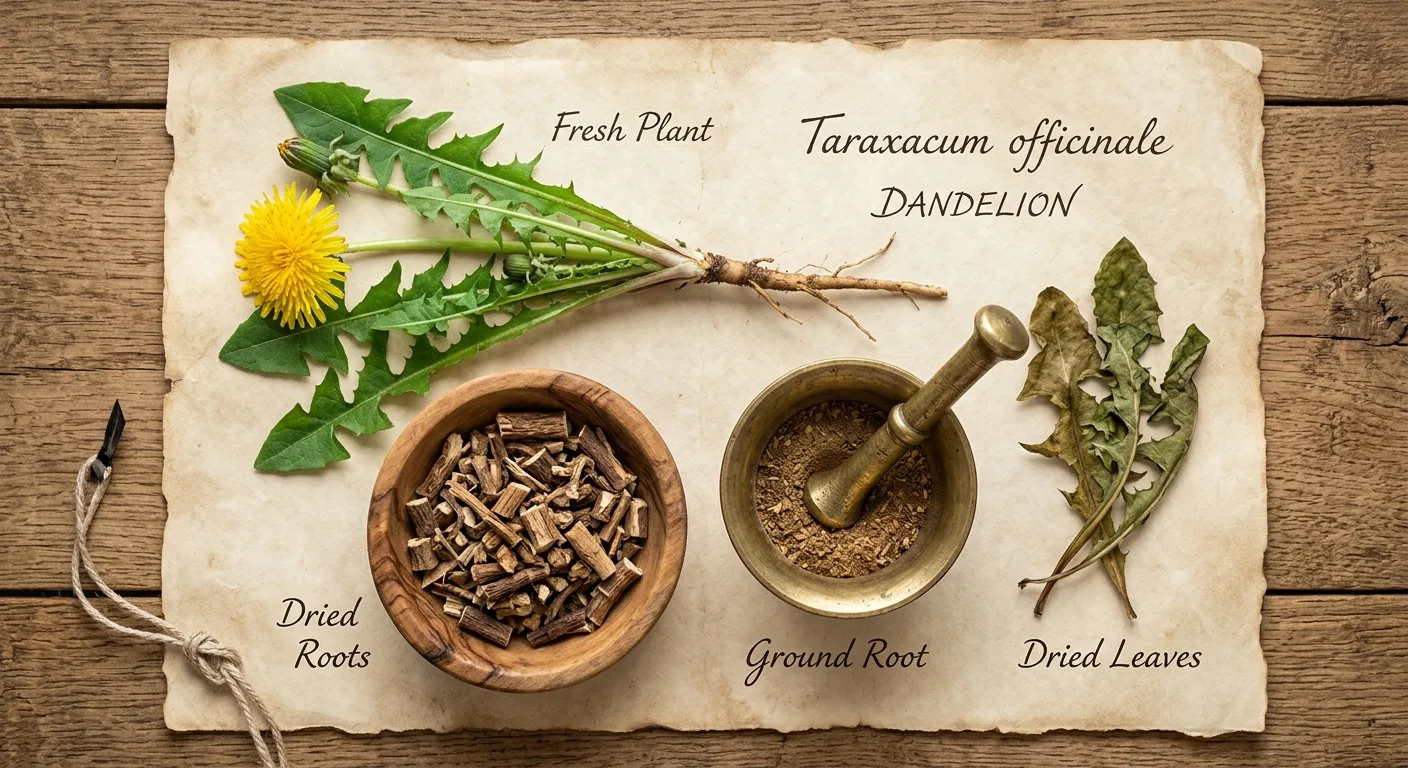
Dandelion (Taraxacum officinale) is a perennial herbaceous plant of the Asteraceae family — the same vast family that includes daisies, sunflowers, chamomile and milk thistle. It is arguably the most recognisable wild plant in the northern hemisphere: a rosette of deeply toothed, lance-shaped leaves radiating from a central taproot, topped by a solitary bright yellow composite flower head that matures into the iconic white seed clock children blow to make wishes. The species name officinale marks it as a plant of the apothecary — a designation the Linnaean system reserved for herbs with an established place in medicine.
Unlike many medicinal herbs that require specific growing conditions, dandelion is astonishingly adaptable. It colonises everything from alpine meadows to urban pavement cracks, and it is present on every continent except Antarctica. This adaptability made it one of the first herbs available to virtually every folk medicine tradition across the temperate world, which helps explain why its traditional use as a digestive and liver tonic emerged independently in cultures that had no contact with one another.
The entire dandelion plant is edible and medicinally active, which is unusual among European herbs. The young leaves are eaten as a spring salad green across much of southern and eastern Europe. The root is roasted and brewed as a coffee substitute. The flowers are fermented into a traditional country wine. And both root and leaves have been dried and infused as a bitter herbal tea since at least the medieval period. This whole-plant tradition distinguishes dandelion from most single-part herbs like milk thistle (seeds only) or valerian (root only).
Where does dandelion grow?
Taraxacum officinale is one of the most universally distributed plants on Earth. It is native to all temperate regions of Europe and Asia and has naturalised across North America, South America, southern Africa, Australia and New Zealand. It grows from sea level to over 3,500 metres in altitude. It colonises meadows, pastures, lawns, roadside verges, waste ground, field margins, riverbanks and forest clearings — essentially any open ground with at least partial sunlight. Few plants on the planet have a broader ecological range.
In Bulgaria, dandelion grows in every meadow, pasture and roadside verge from the Black Sea coast to the highest peaks of Pirin and Rila. It is one of the first wildflowers to appear in spring, carpeting lower-altitude meadows with bright yellow from March onwards. The Rhodope foothills, the Thracian plain and the Danube river lowlands all produce abundant wild dandelion, and the plant has been gathered as both food and medicine in these regions for as long as written records exist.
The extraordinary distribution of dandelion is partly explained by its reproductive strategy. Each seed head contains 50 to 170 seeds, each attached to a feathery pappus that can carry the seed kilometres in the wind. A single healthy plant can produce over 5,000 seeds per year. Moreover, many dandelion populations reproduce by apomixis — a form of asexual seed production that allows the plant to set viable seed without pollination, meaning a single individual can establish an entire colony.
History and traditional use
The earliest written references to dandelion in European medicine come from Arab physicians of the 10th and 11th centuries, who described the plant under the name tarakhshaqun — the likely etymological root of the modern Latin genus name Taraxacum. In Europe, dandelion appears in herbal texts from the 13th century onwards, with Albertus Magnus and later medieval herbalists describing its use as a spring tonic and digestive bitter. By the Renaissance, it had become a standard entry in European pharmacopoeias.
One of the most striking features of dandelion's history is its independent emergence as a liver and digestive herb across multiple unconnected traditions. In Bulgarian and Balkan folk medicine, dandelion root and leaf decoctions have been used since at least the medieval period alongside milk thistle and burdock root — the classic three-herb combination for liver health that appears independently across Mediterranean and Eastern European folk medicine. This same trio, prepared in various ways, shows up in Hungarian, Romanian, Czech, Slovak and South Slavic folk herbal traditions, always in the context of spring cleansing, digestive support and liver tonics.
The English name 'dandelion' derives from the French dent de lion ('lion's tooth'), referring to the deeply serrated leaf margin. The German Lowenzahn carries the same meaning. In Bulgarian, the common name glukharche likely relates to the plant's fuzzy seed head. The Hungarian gyermeklanczfu means 'children's chain herb' — a reference to the folk tradition of making flower chains. These divergent names from different linguistic families all describing the same immediately recognisable plant speak to its deep embeddedness in European folk culture.
Phytochemistry: what dandelion contains
Dandelion is phytochemically complex, with different compound profiles in the root, the leaves and the flowers. The root is the richest source of inulin — a fructose-based polysaccharide that functions as a prebiotic fibre, feeding beneficial bacteria in the gut. Inulin content in the root can reach 40% of dry weight in autumn, declining in spring when the plant mobilises carbohydrate reserves for growth. The root also contains sesquiterpene lactones, principally taraxinic acid glucoside and related bitter compounds, which are responsible for the intensely bitter taste of dandelion root preparations.
The leaves have a different phytochemical emphasis. They are exceptionally rich in potassium — up to 4.5% of dry weight — as well as containing significant levels of chicoric acid, chlorogenic acid and other polyphenols. The high potassium content is pharmacologically relevant because potassium is lost when urinary output increases, and dandelion leaf has been traditionally used as a gentle herbal diuretic; the naturally high potassium may partially offset losses that would occur with other diuretics.
Beyond inulin and sesquiterpene lactones, dandelion contains triterpenes (notably taraxasterol and lupeol), sterols, carotenoids and small amounts of volatile oils. The flower heads contain lutein and beta-carotene, contributing to their intense yellow colour. The milky latex in the stems and root contains rubber-like polyterpenes — so much so that a Russian dandelion species (Taraxacum kok-saghyz) was commercially cultivated as a rubber source during the Second World War. While this is not directly relevant to medicinal use, it illustrates the remarkable phytochemical diversity packed into this common plant.
How is dandelion used today?
In the EU supplement market, dandelion appears primarily as a dried root extract or whole-plant extract in formulations targeting digestive comfort and liver support. It is rarely used as a standalone ingredient; far more commonly it appears alongside other traditionally-used liver herbs — particularly milk thistle, artichoke leaf and burdock root. This combination approach reflects the way dandelion has been used in European folk medicine for centuries: not as a solo remedy but as part of a multi-herb formula where different bitter botanicals are seen as complementary.
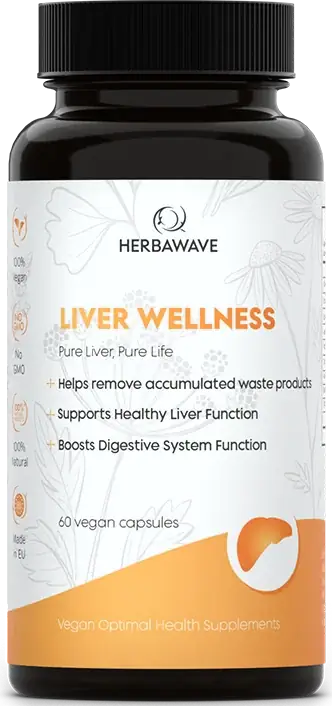
HerbaWave's Liver Wellness formula contains 300mg of dandelion extract per serving, making it the second-highest-dosed botanical in the product after milk thistle (400mg). The formula combines dandelion with milk thistle, burdock root and artichoke leaf — the same traditional combination that appears independently in folk medicine traditions across Central and Eastern Europe.
Outside the supplement industry, dandelion remains widely used as food. The young leaves are sold in spring markets across France, Italy, Greece, Bulgaria and Romania as a salad green or cooking vegetable. Roasted dandelion root is sold as a caffeine-free coffee alternative in health food shops throughout Europe. Dandelion flower wine and dandelion honey are traditional rural products in Central and Eastern Europe. And fresh dandelion leaf is a common ingredient in spring detox juice blends. The plant sits at the intersection of food and medicine in a way that few other herbs do.
Safety and considerations
Dandelion has an exceptionally long history of human consumption as both food and medicine, and it is generally regarded as safe at the doses typically used in herbal supplements. The European Medicines Agency (EMA) classifies Taraxacum officinale as a traditional herbal medicinal product, acknowledging its long history of safe use. No specific EFSA-approved health claims exist for dandelion, meaning it cannot legally be marketed with specific health benefit statements in the EU; products containing dandelion typically rely on EFSA claims for other ingredients in the formula.
People with known allergies to Asteraceae family plants (such as ragweed, chrysanthemums, marigolds or daisies) should exercise caution, as cross-reactivity is possible. Dandelion may interact with certain medications — particularly lithium, certain antibiotics (fluoroquinolones) and drugs metabolised through hepatic pathways — and anyone taking prescription medication should consult their doctor before adding a dandelion supplement. Pregnant or breastfeeding women should also consult a healthcare professional before use, as is standard practice with any herbal supplement.
Frequently asked questions
What is the difference between dandelion root and dandelion leaf? ▾
The root is rich in inulin (a prebiotic fibre) and sesquiterpene lactones (the bitter compounds), while the leaves are exceptionally high in potassium and polyphenols like chicoric acid. Traditional European herbalism uses both parts, often together. The root has historically been emphasised for liver and digestive support, while the leaves have been used more as a gentle diuretic. Liver Wellness uses the whole-plant tradition.
Does dandelion have any EFSA-approved health claims? ▾
No. There is currently no specific EFSA-approved health claim for Taraxacum officinale. The European Medicines Agency (EMA) recognises it as a traditional herbal medicinal product based on its long history of use, but the EFSA claims evaluation process requires a specific type of clinical evidence that dandelion has not yet undergone. Products containing dandelion in the EU typically carry EFSA claims for other ingredients in the formula.
What is the three-herb combination of milk thistle, dandelion and burdock? ▾
Milk thistle, dandelion and burdock root form a classic three-herb combination that appears independently across Mediterranean and Eastern European folk medicine traditions. All three are bitter herbs used historically as liver and digestive tonics, but each contains different active compounds — silymarin in milk thistle, sesquiterpene lactones and inulin in dandelion, arctiopicrin and polyphenols in burdock. The combination is seen as complementary, covering a broader range of bitter compounds than any single herb alone. This traditional trio forms the botanical core of Liver Wellness.
Is dandelion safe if I have an allergy to ragweed or daisies? ▾
Dandelion belongs to the Asteraceae family, the same family as ragweed, daisies, chrysanthemums and marigolds. Cross-reactivity between Asteraceae species is well-documented, so if you have a known allergy to any plant in this family, you should consult your doctor before using dandelion supplements. Allergic reactions can include skin rashes and, in rare cases, more serious responses.
Can I eat wild dandelion leaves as a food? ▾
Yes. Young dandelion leaves are a traditional spring salad green across southern and eastern Europe, eaten raw or lightly cooked. They are most tender and least bitter in early spring, before the plant flowers. Always gather from areas free of pesticide spraying, pet waste and heavy traffic pollution. Dandelion root can also be roasted and brewed as a caffeine-free coffee substitute, and the flowers can be made into wine or syrup.
How much dandelion is in Liver Wellness? ▾
Liver Wellness contains 300mg of dandelion extract per serving (3 capsules). This makes dandelion the second-highest-dosed botanical in the formula after milk thistle at 400mg. The extract uses the whole-plant tradition, consistent with the way dandelion has been used in European folk herbalism for centuries.
Can I take dandelion supplements while pregnant or breastfeeding? ▾
Pregnant or breastfeeding women should consult a healthcare professional before taking any herbal supplement, including dandelion. While dandelion has a long history of food use, concentrated extracts deliver higher levels of active compounds than dietary consumption, and there is insufficient clinical data to confirm safety at supplement doses during pregnancy or lactation.
Is dandelion root coffee a good substitute for regular coffee? ▾
Roasted dandelion root produces a dark, bitter brew that has been used as a caffeine-free coffee substitute across Europe for centuries — particularly during wartime shortages. The flavour profile is earthy, nutty and bitter rather than the acidic brightness of coffee, so it is not a 1:1 taste match. However, it has no caffeine, contains inulin (prebiotic fibre), and has a long tradition of use as a digestive bitter. It remains popular in health food shops across Europe.