Wellness guide
Respiratory Wellness: A Complete Guide
Understanding your respiratory system, the role of mucous membranes, and the European herbal tradition for airway comfort
What does the respiratory system do?
Every breath you take follows an extraordinary path. Air enters through the nose or mouth, passes down the trachea, and branches into smaller and smaller airways called bronchi and bronchioles before reaching the alveoli — tiny air sacs where gas exchange takes place. There are roughly 300 million alveoli in each lung, providing a surface area the size of a tennis court for the exchange of oxygen and carbon dioxide.
Your airways are lined with mucous membranes — a thin, moist tissue that acts as the body's first line of defence against airborne particles, allergens and pathogens. These membranes produce a thin layer of mucus that traps dust, pollen and other particles before they can reach the delicate tissue deeper in the lungs.
Tiny hair-like structures called cilia line the airways and beat in coordinated waves to move mucus and trapped particles upward and out of the respiratory tract. This self-cleaning mechanism — known as mucociliary clearance — works around the clock to keep your airways clear. When cilia and mucous membranes are functioning normally, this process is remarkably efficient.
What affects respiratory comfort?
Urban air pollution is one of the most significant environmental challenges for respiratory comfort in Europe today. According to the European Environment Agency, more than 80 million Europeans are regularly exposed to air pollution levels that exceed World Health Organisation guidelines. Particulate matter (PM2.5), nitrogen dioxide and ground-level ozone can all irritate the delicate lining of the airways.
Seasonal allergens present another common challenge. Pollen from grasses, trees and weeds affects millions of Europeans each spring and summer, while dust mites and mould spores can be an issue year-round in indoor environments. When allergens contact the mucous membranes of the airways, they can trigger responses that affect day-to-day respiratory comfort.
Indoor air quality is often overlooked but can be just as important. Modern energy-efficient buildings with limited ventilation can concentrate volatile organic compounds (VOCs) from furniture, cleaning products and cooking. The average European spends roughly 90% of their time indoors, making indoor air quality a significant factor in respiratory wellness.
Age-related changes also play a role. As we age, the elasticity of lung tissue naturally decreases, and the respiratory muscles may lose some strength. These gradual changes are a normal part of ageing, but they underscore the value of supporting respiratory wellness throughout life. Lifestyle factors — particularly smoking history and levels of physical activity — can further influence airway health at any age.
The role of mucous membranes
Mucous membranes are the unsung heroes of the respiratory system. These thin layers of tissue line not only the airways but also the nose, mouth and throat, forming a continuous barrier between the external environment and the body's internal tissues. They produce mucus, a complex mixture of water, glycoproteins and immune compounds that serves as both a physical and biochemical shield.
Keeping mucous membranes in normal condition is fundamental to respiratory wellness. The European Food Safety Authority (EFSA) has approved specific health claims for two B-vitamins in this context: riboflavin (vitamin B2) and biotin (vitamin B7) each contribute to the maintenance of normal mucous membranes. This is a legally authorised health claim under EU Regulation 432/2012, meaning the supporting evidence has been reviewed and accepted by the EFSA scientific panel.
Beyond the vitamins that have specific EFSA-approved claims, the European herbal tradition has long valued certain plants for their mucilaginous properties — the ability to produce a gel-like substance that has traditionally been used to soothe and coat the mucous membranes. We explore these herbs in the next section.
Traditional European herbs for respiratory wellness
Europe has a long and rich tradition of using plants to support respiratory comfort. From the mountain meadows of the Balkans to the herb gardens of central Europe, generations of herbalists have developed a deep understanding of which plants support airway wellness. While modern science continues to study these traditions, many of these herbs have been in continuous use for centuries.
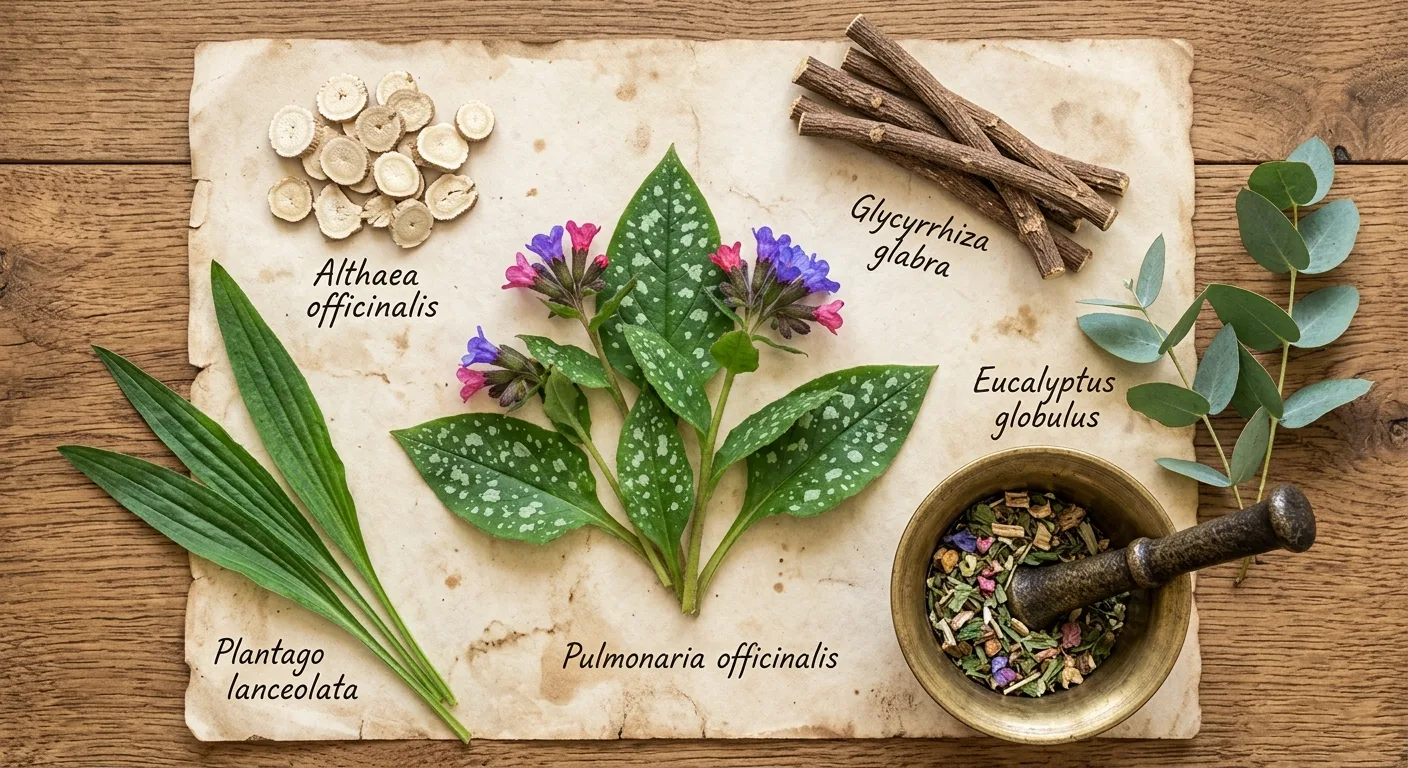
Lungwort (Pulmonaria officinalis) is perhaps the most emblematic respiratory herb in the European tradition. Named for the spotted pattern of its leaves, which reminded Renaissance herbalists of lung tissue, it has been used since at least the 16th century under the doctrine of signatures — the historical belief that a plant's appearance hints at its uses. Lungwort grows wild in the deciduous forests of the Rhodope mountains in Bulgaria and other parts of central and eastern Europe. It is rich in mucilage and silica (silicic acid), which are valued in traditional herbalism for their soothing properties. You can learn more about this remarkable plant in our detailed lungwort article.
Marshmallow root (Althaea officinalis) has been valued in European herbalism since the time of Hippocrates (around 400 BC). The root contains up to 35% mucilage — a gel-forming polysaccharide that swells with water. This mucilage is the reason traditional herbalists have long turned to marshmallow root for soothing comfort. The plant grows in damp meadows and along riverbanks across Europe. Interestingly, the confectionery marshmallow was originally made from a paste of this root, sugar and egg white, before modern manufacturing replaced the plant extract with gelatin. Discover more in our marshmallow root article.
Licorice root (Glycyrrhiza glabra) is one of the oldest documented medicinal plants in human history, with records stretching back over 4,000 years across Egyptian, Greek, Chinese and European traditions. The root contains glycyrrhizin, a compound roughly 50 times sweeter than sugar, along with flavonoids and other phytochemicals. In the European herbal tradition, licorice root has been valued for its soothing properties and its ability to complement other herbs in traditional formulations. Read our full licorice root article for the complete story.
Ribwort plantain (Plantago lanceolata) is a humble mountain meadow herb found across European grasslands. It contains aucubin, an iridoid glycoside, along with mucilage and tannins. In folk herbalism across the Balkans and central Europe, ribwort plantain has been traditionally prepared as a tea or syrup and valued for its soothing properties for the throat and upper airways.
Eucalyptus (Eucalyptus globulus), while originally native to Australia, has been cultivated in southern Europe since the 19th century. The leaves are rich in 1,8-cineole (eucalyptol), an aromatic compound that gives eucalyptus its distinctive fresh scent. In the European aromatic tradition, eucalyptus has been used in steam inhalation and aromatic preparations for generations.
The role of vitamins and minerals
Beyond the herbal tradition, certain vitamins and minerals have EFSA-approved health claims that are directly relevant to respiratory wellness. These are not marketing statements — they are specific, evidence-reviewed claims authorised under EU law.
Vitamin E contributes to the protection of cells from oxidative stress (EFSA-approved claim). The cells lining the respiratory tract are continuously exposed to oxygen and environmental particles, making antioxidant protection particularly relevant in the context of airway health.
Zinc and selenium each contribute to the normal function of the immune system (EFSA-approved claims). The immune system and the respiratory system work closely together — the airways are, after all, one of the body's primary interfaces with the external environment, and a well-functioning immune system helps maintain the normal protective responses of the respiratory tract.
Riboflavin (vitamin B2) and biotin (vitamin B7) contribute to the maintenance of normal mucous membranes (EFSA-approved claims). As discussed in the previous section, healthy mucous membranes are essential for the respiratory system's self-cleaning and protective functions. These B-vitamins support the normal turnover and maintenance of the mucosal tissues that line the airways.
Practical tips for supporting respiratory wellness
Stay well hydrated. Adequate water intake helps maintain the thin, fluid layer of mucus that protects the airways. When the body is dehydrated, mucus can become thicker and more difficult for the cilia to move, potentially reducing the efficiency of the mucociliary clearance mechanism. A simple habit of drinking water consistently throughout the day supports this natural process.
Monitor indoor air quality. Simple measures like regular ventilation — opening windows for even 10-15 minutes a day — can significantly reduce the concentration of indoor pollutants. If you live in an urban area with high outdoor pollution, consider ventilating during off-peak hours (early morning or late evening). Indoor plants can help, and avoiding strong chemical cleaners reduces VOC exposure.
Exercise regularly. Physical activity strengthens the respiratory muscles and improves the efficiency of gas exchange. Even moderate activities like brisk walking, cycling or swimming support respiratory fitness. The European Lung Foundation recommends regular physical activity as one of the most effective ways to maintain respiratory health throughout life.
Consider seasonal factors. During high pollen seasons, simple steps like checking pollen forecasts, drying laundry indoors, and showering after outdoor activity can reduce allergen exposure. In winter, when indoor heating can dry out the air, a humidifier or simply placing a bowl of water near a radiator can help maintain comfortable humidity levels for the airways.
Know when to see a doctor. While educational guides and daily wellness habits are valuable, they do not replace professional medical advice. You should consult a healthcare professional if you experience persistent coughing lasting more than three weeks, unusual shortness of breath, wheezing, chest tightness, or coughing up blood. These could be signs of conditions that require medical evaluation and treatment.
Frequently asked questions
What are mucous membranes and why do they matter? ▾
Mucous membranes are thin, moist tissues that line the airways, nose, mouth and throat. They produce mucus that traps dust, pollen and pathogens, forming the body's first line of defence. Riboflavin (vitamin B2) and biotin (vitamin B7) contribute to the maintenance of normal mucous membranes, as confirmed by EFSA-approved health claims.
Does air pollution really affect respiratory health? ▾
Yes. The European Environment Agency reports that over 80 million Europeans are regularly exposed to air pollution above WHO guideline levels. Fine particulate matter (PM2.5), nitrogen dioxide and ground-level ozone can irritate the mucous membranes of the airways. Both outdoor and indoor air quality matter for respiratory comfort.
What is the difference between a supplement and a medicine? ▾
Food supplements are intended to supplement a normal diet and are not designed to treat, cure or prevent diseases. They are regulated as foods under EU law and may only carry EFSA-authorised health claims. Medicines, by contrast, undergo clinical trials and are authorised to treat specific medical conditions. If you have a respiratory condition, always consult your doctor.
Can I take respiratory supplements alongside medication? ▾
You should always consult your doctor or pharmacist before combining supplements with prescription or over-the-counter medication. Some herbal ingredients — licorice root in particular — can interact with certain medications. A healthcare professional can advise you on what is safe and appropriate for your individual situation.
How long should I take a respiratory supplement? ▾
Supplements are generally designed for ongoing daily use as part of a balanced diet and healthy lifestyle. Most people begin to notice the full effect of herbal supplements after several weeks of consistent daily use. Always follow the dosage instructions on the product label and consult your doctor if you have questions about long-term use.
What does 'EFSA-approved health claim' mean? ▾
The European Food Safety Authority (EFSA) is an independent EU agency that evaluates scientific evidence behind health claims made about foods and supplements. When a claim is 'EFSA-approved', it means the scientific panel has reviewed the available evidence and concluded that the relationship between the nutrient and the stated health benefit is supported. These claims are legally authorised under EU Regulation 432/2012.
Are herbal respiratory supplements safe during pregnancy? ▾
Pregnant and breastfeeding women should always consult their doctor before taking any supplement, including herbal ones. Some herbs — such as licorice root in high doses — are generally not recommended during pregnancy. Your healthcare provider can advise you on what is safe during this important time.
When should I see a doctor about respiratory concerns? ▾
See a doctor promptly if you experience persistent coughing lasting more than three weeks, shortness of breath that is new or worsening, wheezing, chest tightness or pain, coughing up blood, or unexplained weight loss alongside respiratory symptoms. These may indicate conditions that require professional diagnosis and treatment. Supplements are not a substitute for medical care.