Ingredient reference
Licorice Root
Glycyrrhiza glabra · Fabaceae
Native range
Southern Europe, western Asia, and the Mediterranean basin, including Bulgaria
Part used
Root and rhizome
Key compounds
Glycyrrhizin, Glycyrrhetinic acid, Liquiritin, Isoliquiritin, Glabridin
Traditional use
One of the oldest documented medicinal plants — used in Egyptian, Greek, Chinese and European traditions for millennia
What is licorice root?
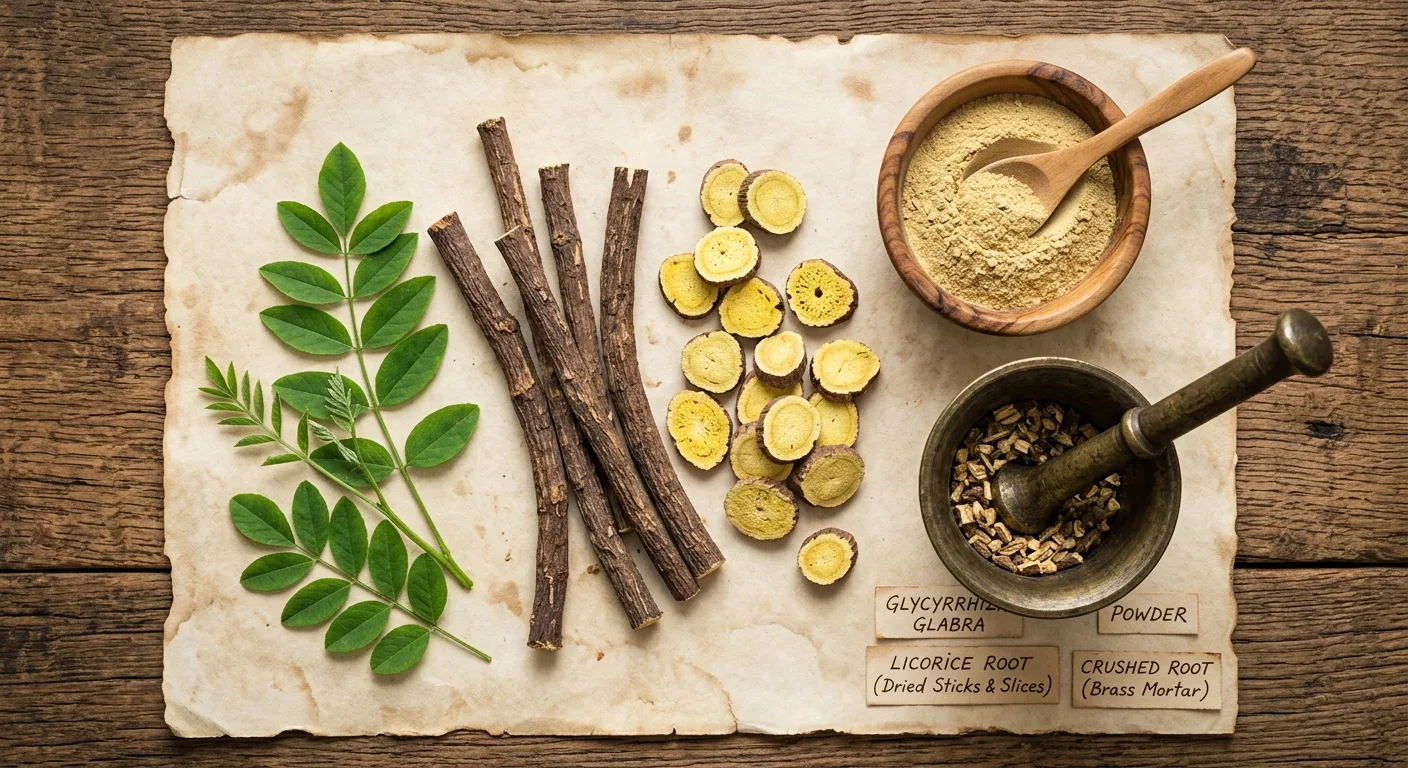
Licorice root (Glycyrrhiza glabra) is the dried root and rhizome of a perennial legume in the Fabaceae family — the same family as peas, beans, lentils and clover. The plant grows as a shrubby herb, typically reaching 1 to 1.5 metres in height, with pinnate compound leaves and small pale-blue to violet flowers arranged in loose spikes. But it is underground where the plant's real character lies: the root system is extensive and deep, producing long, cylindrical roots and horizontal rhizomes that can extend several metres from the parent plant. When cut, the fresh root reveals a bright yellow, fibrous interior and releases a distinctively sweet taste that has made it one of the most recognisable flavours in herbal medicine worldwide.
The name Glycyrrhiza comes directly from the Greek words glykys (sweet) and rhiza (root) — the 'sweet root' plant. And sweet it is: the primary active compound glycyrrhizin is estimated to be 30 to 50 times sweeter than sucrose, which is why licorice has been used as a natural flavouring and sweetening agent in herbal preparations for millennia. The English word 'licorice' (or 'liquorice' in British English) is itself a corruption of the Greek Glycyrrhiza that evolved through Old French and Middle English.
Unlike many herbal remedies that rely on a single class of compounds, licorice root contains a remarkably diverse phytochemical profile. The principal triterpene saponin glycyrrhizin accounts for the intense sweetness and many of the traditional applications, but the root also contains a wide range of flavonoids, isoflavonoids, chalcones and polysaccharides, each contributing to the plant's complex pharmacological profile. This chemical diversity is one reason why licorice appears in so many different traditional herbal formulas — from respiratory preparations to digestive tonics to topical poultices.
Where does licorice root grow?
Glycyrrhiza glabra is native to a broad belt stretching from the Mediterranean basin through Turkey, the Caucasus and Iran to Central Asia. It thrives in deep, fertile, well-drained alluvial soils — river valleys, flood plains and irrigated lowlands where groundwater is accessible. The plant tolerates moderate salinity and prefers warm, dry summers with ample sunshine, which is why the classic growing regions include southern Spain, Italy, Greece, Turkey, the Caucasus countries, Iran, Afghanistan and Turkmenistan. In these regions the deep taproots can reach water even during summer droughts, allowing the plant to survive conditions that would kill shallower-rooted herbs.
In Bulgaria, wild Glycyrrhiza glabra grows in the warmer southern regions of the country, particularly along the Maritsa river basin and its tributaries in the Upper Thracian Lowland. The alluvial soils deposited by the Maritsa and its feeder rivers provide the deep, moisture-retaining substrate that licorice requires. Bulgarian licorice has been collected from these areas for centuries — the warm continental-Mediterranean transitional climate of southern Thrace, with its hot summers and mild winters, closely matches the plant's native habitat preferences. The root is traditionally collected in autumn, after the above-ground parts have died back and the phytochemical content of the root is at its seasonal peak.
History and traditional use
Licorice root is one of the oldest and most widely used medicinal plants in recorded human history. The Ebers Papyrus, an Egyptian medical text dating to approximately 1550 BC, mentions a sweet root used in herbal preparations — widely identified by scholars as Glycyrrhiza. In ancient Mesopotamia, cuneiform tablets from the Assyrian herbal tradition also reference a sweet root used medicinally. The Chinese pharmacopoeia has included licorice (gan cao, literally 'sweet herb') for at least 2,000 years, where it is considered one of the most important 'harmonising' herbs — used to moderate and balance the effects of other herbs in a formula. The Greek physician Theophrastus, writing around 300 BC, described the 'Scythian root' from the shores of the Black Sea that soldiers chewed to stave off thirst during long marches — a practice that continued well into the Roman era.
In European herbal medicine, licorice root was a staple of medieval monastery gardens and apothecary shops. The medieval herbalists valued it both as a medicine in its own right and as an ingredient that made other bitter herbal preparations more palatable. The tradition of using licorice in respiratory preparations — teas, syrups, pastilles and lozenges — dates back at least to the medieval period and continued unbroken through the Renaissance herbals of Hieronymus Bock, Leonhart Fuchs and John Gerard. In the Balkans and specifically in Bulgaria, wild-collected licorice root from the Maritsa basin has been a component of folk respiratory remedies for generations, often combined with other locally available herbs such as lungwort, marshmallow root and thyme.
Phytochemistry: what does the root contain?
The most prominent compound in licorice root is glycyrrhizin, a triterpene saponin that accounts for 2-14% of the dried root by weight depending on the variety, growing conditions and harvest time. Glycyrrhizin is a glycoside — specifically, it is the potassium and calcium salt of glycyrrhizic acid, which upon hydrolysis releases the aglycone glycyrrhetinic acid (also known as enoxolone). Glycyrrhizin is responsible for the intense sweetness of the root and is estimated to be 30 to 50 times sweeter than sucrose on a weight-for-weight basis. This exceptional sweetness is the reason why licorice extract has been used as a natural sweetener and flavouring agent in food, confectionery and herbal preparations for millennia.
Beyond glycyrrhizin, the root contains a rich array of flavonoids and isoflavonoids. The most studied flavonoids include liquiritin and its isomer isoliquiritin, as well as liquiritigenin and isoliquiritigenin (their respective aglycones). The isoflavonoid glabridin, found primarily in the root bark, has attracted particular research interest. Additional compounds include various coumarins, chalcones such as licochalcone A, and polysaccharides known as glycyrrhizans. The root also contains phytosterols, amino acids and small amounts of essential oils. This complex phytochemical matrix — with over 300 identified compounds to date — makes licorice root one of the most chemically diverse medicinal plants studied by modern phytochemistry.
How is licorice root used today?
In modern herbal practice, licorice root continues to be one of the most commonly used botanicals worldwide. It appears in a wide variety of supplement formulations — from standalone licorice root capsules and liquid extracts to multi-herb blends for respiratory and digestive wellness. The root is available in several forms: whole dried root for decoctions and teas, powdered root, fluid extracts, dry extracts standardised to glycyrrhizin content, and deglycyrrhizinated licorice (DGL) preparations in which the glycyrrhizin has been specifically removed. The DGL form was developed to provide the benefits of the flavonoid and polysaccharide fractions while avoiding the potential blood-pressure effects of glycyrrhizin — a distinction that is important for consumer safety and discussed in the safety section below.
In the European Union, licorice root is classified as a traditional botanical ingredient in food supplements. It does not currently carry any specific EFSA-approved health claim — its regulatory dossier remains in the pending queue of traditional botanical submissions that EFSA has not yet fully evaluated. This does not reflect a negative assessment; rather, the regulatory process for traditional botanicals has been paused at EU level for several years. Licorice root continues to be legally marketed as a food supplement ingredient throughout the EU under the existing national transitional measures, and its long history of traditional use is well-documented in the pharmacopoeias of multiple EU member states.
Safety, dosage and contraindications
Licorice root is one of the few traditional herbs for which there are well-documented safety considerations that every consumer should be aware of. The key compound of concern is glycyrrhizin. When consumed in significant quantities over extended periods, glycyrrhizin can inhibit the enzyme 11-beta-hydroxysteroid dehydrogenase type 2 (11-beta-HSD2), which plays a role in cortisol metabolism. This inhibition can lead to a condition called pseudoaldosteronism — characterised by sodium retention, potassium loss, water retention and a consequent rise in blood pressure. The European Commission Scientific Committee on Food has established a guidance threshold of 100mg of glycyrrhizin per day as a level at which adverse effects become a concern for regular long-term consumption.
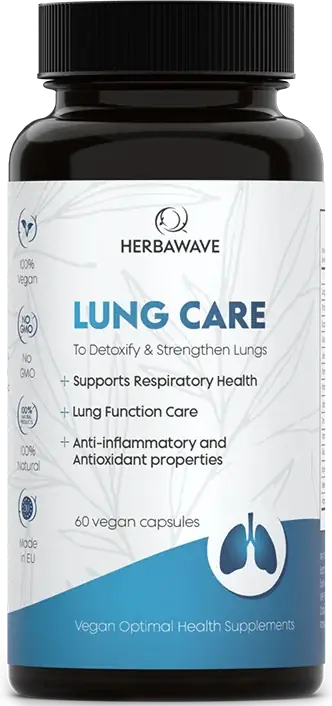
For this reason, licorice-containing supplements should not be taken by individuals with high blood pressure (hypertension), heart conditions, or kidney disease without first consulting a doctor. Licorice root should also be avoided during pregnancy — glycyrrhizin has been associated with potential effects on foetal development in observational studies, and most regulatory bodies recommend that pregnant women avoid licorice-containing products. Similarly, individuals taking blood pressure medication, potassium-depleting diuretics, corticosteroids, or cardiac glycosides (such as digoxin) should not take licorice root supplements without medical supervision, as the glycyrrhizin may interact with these medications. At the 70mg dose of licorice root extract found in standardised supplement formulations such as Lung Care, the glycyrrhizin intake is well below the 100mg daily threshold, but the precautionary guidance still applies for the groups mentioned above.
Frequently asked questions
What makes licorice root sweet? ▾
The sweetness comes from glycyrrhizin, a triterpene saponin compound that is estimated to be 30 to 50 times sweeter than table sugar (sucrose). Glycyrrhizin constitutes roughly 2-14% of the dried root by weight. The name Glycyrrhiza itself is Greek for 'sweet root' (glykys = sweet, rhiza = root).
Can licorice root affect blood pressure? ▾
Yes. Glycyrrhizin, the main active compound in licorice root, can cause sodium and water retention when consumed in large amounts over time, which may raise blood pressure. The European Commission Scientific Committee on Food considers daily intake above 100mg of glycyrrhizin a concern. People with high blood pressure, heart disease or kidney disease should consult a doctor before taking licorice-containing supplements. At low doses (such as the 70mg licorice extract in Lung Care), the glycyrrhizin content is well below this threshold, but the precaution remains important.
Is licorice root safe during pregnancy? ▾
Licorice root is generally not recommended during pregnancy. Glycyrrhizin has been associated in observational studies with potential effects on foetal development. Most health authorities and supplement manufacturers, including HerbaWave, recommend that pregnant and breastfeeding women avoid licorice-containing products. Always consult your doctor before taking any supplement during pregnancy.
What is deglycyrrhizinated licorice (DGL)? ▾
DGL is a form of licorice root extract from which the glycyrrhizin has been specifically removed. This was developed to retain the benefits of the flavonoid and polysaccharide compounds in licorice while eliminating the compound most associated with potential blood pressure effects. DGL products are typically used in digestive-focused applications. Standard licorice root supplements (including the licorice in Lung Care) contain the full spectrum of compounds including glycyrrhizin.
Does licorice root have any EFSA-approved health claims? ▾
No specific EFSA-approved health claim currently exists for licorice root (Glycyrrhiza glabra). It is classified as a traditionally-used botanical in EU supplement regulation. The regulatory review of traditional botanicals has been on hold at EU level for several years, so the absence of an approved claim does not indicate a negative assessment — it simply means the evaluation has not yet been completed.
How old is the use of licorice root in medicine? ▾
Licorice root is one of the oldest documented medicinal plants. The earliest known reference appears in the Ebers Papyrus, an Egyptian medical text from approximately 1550 BC — making the documented medicinal use at least 3,500 years old. Chinese traditional medicine has used it for over 2,000 years. In European herbalism, Theophrastus described it around 300 BC, and it has been in continuous use in European herbal medicine ever since.
Does licorice root grow in Bulgaria? ▾
Yes. Wild Glycyrrhiza glabra grows in the warmer southern regions of Bulgaria, particularly along the Maritsa river basin and its tributaries in the Upper Thracian Lowland. The alluvial soils and warm continental-Mediterranean transitional climate of this region provide ideal conditions. The root has been wild-collected in these areas for generations and is traditionally harvested in autumn when the phytochemical content is at its peak.
How much licorice root is in Lung Care? ▾
Lung Care contains 70mg of Glycyrrhiza glabra (licorice root) extract per serving. This is one of six botanical ingredients in the formula, alongside lungwort (500mg), eucalyptus, marshmallow root, ribwort plantain and greater plantain. The 70mg dose provides the traditional respiratory-support benefits of licorice while keeping the glycyrrhizin content well below the 100mg daily threshold identified by European food safety authorities.